



being a teen isn’t easy.
Seen & Heard is a limited series podcast about teen mental health.
One connection - with one supportive adult - can be life-changing.

This podcast is for teens — and the adults who support them
Teens: You are not alone. Listen to your peers share their stories with raw honesty and openness. Their insights might surprise you.
Adults: When teens struggle, one connection with one supportive adult can make an enormous difference. Learn from adults who have been hand-picked by our young guests. They’ve provided meaningful support. You can too.
All Listeners: You’ll come away more confident when talking about mental health and better equipped to connect with each other. And, throughout, you’ll hear from mental health professionals who will help you connect our guests' stories to your own lives.

12 episodes
4 featured guests
3 episodes each
first episode
Our featured guest.
A teen or young adult (Ellie, A.J., Brenna, Lauren) shares their story with raw honesty and openness.
second episode
A supportive adult,
hand-picked by our featured guest, shares their perspective … and … a mental health professional provides deeper insight.
third episode
Your host,
Charlotte Bausha, talks it all over with her friend and mentor, Lucy Pilcher.
episode 1.
What I Wish I Knew About Trust:
Ellie’s Story of Healing After Trauma.
Ellie’s summer took a painful turn when she faced a traumatic workplace experience. Back at school for her senior year, a new opportunity helped her find her footing and step toward recovery. In this episode, we explore teen mental health struggles, including social anxiety and self-harm, while offering actionable advice for parents and educators on how to support a teen through trauma.
“I needed someone to tell me that it doesn't have to be so big. The trauma doesn't have to be everything. It can just be a little sticky note that you put in the closet.”
- Ellie

-
Episode 1
What I Wish I Knew About Trust: Ellie’s Story of Healing After Trauma.
Summary:
“Ellie’s summer took a painful turn when she faced a traumatic workplace experience. Back at school for her senior year, a new opportunity helped her find her footing and step toward recovery. In this episode, we explore teen mental health struggles, including social anxiety and self-harm, while offering actionable advice for parents and educators on how to support a teen through trauma.”
Transcript:
Charlotte: Welcome to Seen & Heard, a podcast about teen mental health. Over twelve short episodes, we'll meet four young people. Each one will share their personal story about teen mental health with tremendous honesty and openness. Whether you're a teenager, or an adult who cares about a teenager, you'll learn a ton from these stories. Each young person has chosen one adult to join them on this podcast, someone who was important to them in difficult times. And we'll hear from mental health professionals. They'll help us connect these stories to our own personal experiences. All along, you'll be hearing a lot from me. I'm your host, Charlotte Bausha. I have a bachelor's degree in psychology, I work as a research assistant, and I'm preparing for graduate studies in clinical child psychology. I'll bring my own perspective to the podcast, from my studies, and from my personal experiences as an adolescent. I've worked with an amazing team from Dartmouth Health, a child and adolescent psychiatrist, a trauma psychologist, a therapist, and even a podcast producer. Listeners, I'm happy you're here. And, I'm excited for the opportunity we have to learn together. When I come back, we'll get started with our first guest.
Charlotte: Before we go further, a quick note. For privacy, we'll only use first names, and sometimes pseudonyms. Our first guest is Ellie. Her story centers on a difficult experience at a summer job during high school. We'll get to that, but first, let's get to know Ellie a bit, starting with her childhood. Ellie experienced anxiety. For example.
Ellie: My family and I went to the fair one time, and my brother came back with these bacon cheddar potato chips, and someone made a joke about clogging his arteries with them. And I remember that so vividly because I remember thinking, oh, I have to sit outside his door now and make sure nothing happens to him in his sleep.
Charlotte: That's a vivid memory, but not the only one.
Ellie: And sometimes it was a bit compulsive, checking in my closet to make sure there wasn't someone there.
Charlotte: Ellie found ways to deal with it.
Ellie: We raised pigs and we always had a lot of animals and goats and chickens and we always had at least a dog. And that was always really important to me and a source of calming energy.
Charlotte: Calming energy. We all need to know where to find it. I like to paint. And, I like to spend time with my dogs, Ila and Ferdinand. You probably have your own places or things that help you feel calm. Ellie had some other calming activities.
Ellie: I always loved baking and if I wanted something like a fun treat, I'd just go figure out how to make it and that was always fun.
Charlotte: She also discovered another outlet, one that will play a big role in our story.
Ellie: And I've always really loved creative writing and that's been a huge part of my identity and how I interact with the world.
Charlotte: As she got older, Ellie faced something many teens know well, social anxiety. She worried about what other people thought of her.
Ellie: I was very protective of what people thought of me and I'd try to really control how I presented myself to other people, and, if anyone was talking about me, that would just completely freak me out. I remember when people started talking about crushes and things in middle school and liking people and things like that. I remember thinking, if someone comes up to me and says they like me, that is the end of the world. I cannot deal with that. And I remember thinking, I don't want people paying attention to me like that.
Charlotte: There was more. Ellie contended with a difficult medical condition.
Ellie: Oh, it would manifest as like dizziness and brain fog, anxiety. I couldn't sleep alone for a while.
Charlotte: Ellie's family provided plenty of love.
Ellie: I definitely grew up with a very nurturing environment.
Charlotte: But she felt alone with her anxiety.
Ellie: When I was younger, we didn't really talk about mental health in my family. It just may not have been explicitly discussed.
Charlotte: Ellie's anxieties continued into her high school years.
Ellie: I think anxiety felt like something that was just out of my control. It just always felt very overpowering and I had to do something in response to control that huge emotion.
Charlotte: So, that was Ellie. She felt well-loved at home, and she enjoyed animals, baking, and writing. But she had big anxieties that felt beyond her control at times, and back then, she wasn't talking about it to anyone. Today, Ellie's quite skilled at talking about her mental health. She does it comfortably and frequently. But no matter your age, it's not easy to talk about mental health, especially if you've never done it before. One of our big goals is to help you get the support you want and need, by making you more comfortable and more skilled at talking about your own mental health. There's no textbook or how-to guides. One of the best ways to get better is to listen to others who do it well and then try it yourself. Everyone on this podcast is quite good at describing their thoughts and emotions and telling their own stories in their own words. Just by listening, you'll pick up language and ideas that will make it easier for you to talk. And once you start talking, you'll find that it gets easier with practice. Also, just by listening, you'll probably learn that whatever you're feeling, you are not alone. When we come back, we'll dig into Ellie's summer job and set the stage for the rest of the story. Before we go on, a brief warning. This material may be difficult. It includes mentions of panic attacks, sexual assault, self-harm, and attempted suicide. Please treat yourself with kindness and care, and consider listening with a friend. Also, remember this. A great feature of podcasts is the pause button. If you need a break, just press pause. I'll be here when you come back. Finally, if you or a loved one feels distress or has thoughts of suicide, call nine-eight-eight. You can find more resources in the show notes.
Charlotte: Ellie's summer job, before her senior year in high school, was at a retreat center focused on well-being.
Ellie: There'd be a lot of guests that were there for PTSD or they're there for physical illness, other mental health conditions. At the time I was super interested in holistic medicine and alternative medicine, and I wanted to go vegan, and I wanted to learn more about meditation.
Charlotte: She hoped to learn about holistic medicine, but her actual job was typical for high school students.
Ellie: I worked there in the dining hall, serving food, cleaning tables, cleaning the buffet, doing that kind of thing, answering questions.
Charlotte: One of Ellie's supervisors was a man named Bill.
Ellie: He was brand new that summer and he was the manager of the dish room. Sometimes I'd work with him and sometimes I wouldn't. Sometimes I'd be in the front-of-house.
Charlotte: Ellie worked alongside a friend and classmate. They both enjoyed getting to know Bill.
Ellie: We thought he was really smart and funny and just fun to work with. And he definitely appreciated when people were hardworking and dedicated. We were very prideful in what we were doing, even if it was just washing dishes.
Charlotte: Bill made an effort to get to know the people he worked with.
Ellie: Bill was very inquisitive and wanted to know what I was like, and what I wanted to do with my life, and what my family was like, and what I liked in school and what I didn't like.
Charlotte: A few weeks into the summer, Emily, another student from Ellie's high school, started working in the kitchen. The two girls knew each other, but they weren't close. Ellie noticed that Bill was getting to know Emily, as he'd done with others. But Bill seemed even more interested in Emily's life. One day, the three of them talked about meditation, something that they were all interested in. And Bill had an idea.
Ellie: He started this informal meditation group between me, him, and Emily. And he said that if you really want to learn meditation, you have to do it at least three times a day. So, he wanted us to call in the morning, and then he wanted us to meet in the afternoon, and then meet in the evening.
Charlotte: In the evenings, they went to a different building.
Ellie: We went to this place called the Sanctuary on campus, which is just a building dedicated to meditation space. And we went there, the three of us, and meditated.
Charlotte: Ellie left early one evening. She had a curfew. Later, Ellie learned what happened to Emily after she left.
Ellie: That night is when Bill walked Emily to somewhere else on campus, near the woods, and sexually assaulted her.
Charlotte: Listeners, you just heard a trigger warning and a brief narrative. So, some of you may have anticipated what was coming. But Ellie and Emily did not. Both girls were blindsided. Both were young and impressionable, and they'd put their trust in an authority figure. Sadly, Emily's experience is common. Nationwide, 81% of women and 43% of men reported some form of sexual harassment or assault in their lifetime. And, girls ages 16-19 are at four times the risk of sexual assault as the general population. Ellie wasn't assaulted, but both Emily and Ellie face challenges. When we come back, Ellie will share more of her story.
Charlotte: When Ellie returned to work, she didn't know what had happened. The first sign? An unexpected conversation.
Ellie: I got to HR and they were like, you know this man, Bill, has he touched you or kissed you or hugged you or anything that's made you uncomfortable? And I was like, absolutely not. In no way is this a bad person. He's trying to help us with this meditation stuff, and he's teaching us things. He's been only a positive influence.
Charlotte: Soon after that, Emily told Ellie about the assault.
Ellie: And I straight up did not believe her, because at that point, I was wrapped around his finger, influenced by what had been going on.
Charlotte: Bill was talking with Ellie too.
Ellie: I was kind of playing the middle, and, they were communicating through me, and I was talking to both. It was just very confusing. And I didn't know who was telling the truth and who was lying.
Charlotte: By the end of the week, Bill was gone.
Ellie: He was fired and told to never return Friday morning.
Charlotte: The retreat center never told Ellie anything.
Ellie: They didn't communicate directly through me. My mom told me.
Charlotte: They had meditated on Monday. By Friday, Ellie was struggling. At one point, while driving, she just pulled off the road.
Ellie: The week's craziness just hit me. I was sobbing and hyperventilating, and I was having a panic attack, and I couldn't feel anything. And everything went numb, and I just sat on the side of the road, and I think I called my mom.
Charlotte: Most have heard the term panic attack. But what does it mean, exactly? A panic attack is a sudden wave of intense fear. It can trigger a racing heart, sweating, shortness of breath, chest pain, dizziness, and numbness. Sometimes people feel like they're going to pass out, or that they're choking, or even that they're dying. But panic attacks are not life-threatening, and they typically last no more than several minutes. About one in ten people has a panic attack at some point in their life. In a later episode, we'll have a chance to talk about what to do if someone near you has a panic attack. When we return, Ellie's back at school, starting her senior year.
Ellie: Senior year got off to a tough start. Ellie felt a powerful mix of emotions. Every day at school, she saw Emily. I wanted to be helpful and supportive of her, and what she was going through, and what she was processing. And I didn't know how to support another 17-year-old.
Charlotte: A few weeks later, Emily attempted suicide, at school.
Ellie: And I remember very vividly watching the ambulance pull up to the school.
Charlotte: Ellie's mind started to race.
Ellie: If she dies, like, that's on me. She trusted Bill because she trusted me and I trusted him. I felt so much guilt about it because I felt like I could have changed the course of events or could have prevented it.
Charlotte: If she dies, that's on me. She trusted Bill because she trusted me, and I trusted him. Let's take a moment. As listeners, we know this isn't Ellie's fault. But let's focus on what Ellie felt at that moment. She worried that Emily would die, and that it'd be her fault. Ellie felt intense guilt that day, and fear.
Ellie: I had spent a lot of time alone with him, just chatting about random things, like the future and college and what I wanted to do.
Charlotte: She wondered if the same thing might have happened to her.
Ellie: I meditated with him alone on that Tuesday or something. And we were in the sanctuary together, just the two of us. That's burned in my brain, you know? I'll never get rid of that. It was haunting almost, that thought of what could have happened to me when I was alone with him. I was just really wound up all the time, and it made it really hard for me to trust adult men.
Charlotte: Ellie also felt anger.
Ellie: Most days, I was angry at Bill.
Charlotte: She was also mad at the retreat center.
Ellie: I was angry at them because they treated me like an adult when it came to like the payroll and hours, and then they treated me like a kid when it came to this. I was really angry about that, because I felt like I deserved them to say to me, "We're sorry you were in this situation." I was also really angry with myself, because I didn't see it, and I didn't recognize it, and I didn't protect her in the way that I felt like I should have.
Charlotte: A swirl of emotions. Guilt. Anger. Fear. Regret.
Ellie: I just kind of lost it a little bit, and I didn't know, I didn't have coping mechanisms, I didn't know how to deal with things. And I started cutting, and that was happening every day for at least two months.
Charlotte: Ellie started to harm herself. It wasn't the first time she'd tried it.
Ellie: Yeah, so the first time that I ever self-harmed, I think I was in middle school. I think it was like a "Look what I can do."
Charlotte: Back then, she had experimented a bit. But now, she was harming herself daily. Ellie faced a lot, and she was drawn to causing herself physical pain.
Ellie: I wanted that discomfort because it took away from the other discomfort of being anxious all the time. It took away from the largeness of the anxiety and the trauma. It felt like a way to manage how big everything had become. I feel really crappy, like I feel really foggy right now. And I have all this homework to do, but if I just self-harm right now, I'll have the new clarity to do things again.
Charlotte: Ellie kept her self-harm private, by covering her scars.
Ellie: And nobody knew, because I was very strict about making sure nothing was seen. I wanted to keep it to myself. I felt better knowing I had this thing that nobody else knew about. And I think that felt very powerful for me.
Charlotte: But soon, she felt overwhelmed by her own habit.
Ellie: But it started to feel really powerful, like more than I wanted it to be.
Charlotte: Even so, Ellie feared talking about it, to anyone.
Ellie: I felt like if people knew that I was cutting, it would feel like I'd be accused of like, you're doing it for attention, like this isn't real, just stop. And at that point, I feel like I was probably addicted to it, and there was no just like, just stop.
Charlotte: She couldn't imagine telling her family.
Ellie: I still have a really hard time sharing details with my family, just because I want them to see the best of me.
Charlotte: Eventually, Ellie worked up the courage to quietly tell a friend.
Ellie: She was immediately like, okay, you need to go to therapy. You need to tell your parents.
Charlotte: That little nudge was a true act of friendship, and it made a difference. Soon, Ellie knew that she needed help.
Ellie: I hit a point where I was like, I can't be alone in this anymore.
Charlotte: Then, she did something brave.
Ellie: I told my mom, I said, I am not doing okay. I really need to see a therapist. And I didn't tell her why, I didn't get into specifics.
Charlotte: Before long, Ellie starting seeing a therapist. We'll talk more about that shortly. But first, when we come back, we'll talk about how Ellie found a different source of support at school.
Charlotte: Ellie was a dedicated student, but she hit a wall in one class.
Ellie: So I was three weeks behind in AP Bio. It felt like the end of the world. And I couldn't keep up. The AP bio teacher was very intense. She was very strict, and everything needs to be done in a specific way. So I just dropped it.
Charlotte: Instead, she chose a class she knew she'd enjoy.
Ellie: So then I joined a creative writing class, and that was exactly what I needed at that time.
Charlotte: Her teacher created an environment that was practically the opposite of AP Bio.
Ellie: My teacher was just such a wonderful influence, and she was very warm, and she always had tea for us to drink. She'd give us prompts, or we could just talk about our feelings. We'd do little writing prompts, and we'd share it with each other.
Charlotte: The class welcomed all high school students. Ellie liked that.
Ellie: All of the students were younger than me, so nobody knew me well. And that was helpful, because I was just around people that I didn't care what they thought of me.
Charlotte: We asked Ellie to talk about the assignments.
Ellie: There was one where you were supposed to start sentences with, "I Remember," and then talk about like an event or something.
Charlotte: So, Ellie wrote about her experiences over the summer.
Ellie: I was just trying to place emotions to things and trying to talk about the experience as matter-of-fact as I could.
Charlotte: For example.
Ellie: I was talking about being scared to go to my car, because I was worried he was hiding in the bushes.
Charlotte: Ellie may not have realized it, but she'd taken a crucial first step towards recovery. She was reflecting on what she'd been through and what she was now feeling. And she was expressing it. The classroom felt healing.
Ellie: Even if I wasn't telling her, like, "Hey, I need help." I wasn't saying that, but I knew that my words were reaching her, and that was all I really needed.
Charlotte: Later on, the teacher supported Ellie in other ways.
Ellie: I remember talking to her about college and stuff, going through that process of that scholarship and how stressful it felt. She definitely helped to just bring the lightness in there and make things feel a little smaller and a bit more manageable.
Charlotte: Ellie never forgot her teacher. Nor will she forget what she learned, the value of expressing herself, the value of sharing her story.
Ellie: The more that I've talked about what happened and talked about my mental health, the more that I talk about it, the more it feels manageable. I was really scared of what people would think of me if I talked about it, but it ended up being one of the most freeing things to talk about. That, kind of, has benefited relationships with my family, and my friends, and these people who are really important to me.
Charlotte: Therapy also helped Ellie share her story, even though her first therapist didn't work out.
Ellie: So I went to one therapist, and she wanted me to do play therapy.
Charlotte: Some therapists use play-based strategies. For example, they might use dolls to represent feelings, or to simulate past events. Not everyone finds it helpful.
Ellie: And I was like, no, absolutely not will I talk to a figurine like it's a predator.
Charlotte: Ellie didn't give up on therapy though. Instead, she found a better fit.
Ellie: I went to a different therapist, and she was amazing.
Charlotte: Amazing, but even so, it took a while before Ellie was able to mention self-harm.
Ellie: Yeah, I didn't want to tell her at all. And I'm pretty sure I told her with like five minutes left, week four. And I remember her face because she was like, "Oh, okay, I see."
Charlotte: Ellie and her therapist built a long-lasting relationship. Ellie still values it, years later.
Ellie: I still see her every now and then.
Charlotte: Ellie also started taking medication for anxiety.
Ellie: It was really helpful for me. I didn't have a lot of side-effects. It felt like my brain calmed down a little bit, enough that I could kind of address what had happened, and what was going on in a way that was more controlled and healthy.
Charlotte: So, Ellie learned to express herself more freely, and she benefitted from therapy and medication. She also learned to redirect her brain when she's anxious. She channels her energy into activities like exercise, painting ....
Ellie: and reading a lot and just trying to focus on learning other behaviors that I could do to help myself.
Charlotte: When we come back, we'll fast-forward several years and find out where Ellie is today.
Charlotte: Ellie's done a lot in the last few years. She won the scholarship that her teacher helped her apply for, she finished college, she earned a master's degree in public health, and she celebrated these accomplishments with family and friends. She's also worked hard to learn as much as possible from her experiences. For example, it's been important to Ellie to figure out why she put so much trust in Bill.
Ellie: He was trying to act like this person that is safe, and that you can count on, and that you can trust, and that you can believe in. And that just wasn't true at all. He would say things like, you need to learn self-defense, and you need to be able to defend yourself before you go to college. As a 17-year-old who's like been dealing with anxiety forever, it's so nice to hear someone be interested in what you want to do, and where you want to go, and who you want to be. And I think he knew exactly that.
Charlotte: Ellie also sees how Bill's position of power played a role.
Ellie: Because he was the manager, he was always telling us what to do and where to go. And so, we were very used to that. He used that influence to be like, tell me everything about your family, like who they are, what they're like, tell me everything. I was very used to saying yes to him, and I think that was also part of the manipulation.
Charlotte: And, she's gained perspective on what she needed most after that traumatic summer.
Ellie: I needed someone to tell me that it doesn't have to be so big. The trauma doesn't have to be everything. It can just be a little sticky note that you put in the closet. I could have been nicer to myself, and work on taking less of that blame, and put it where it belongs.
Charlotte: Like many people, Ellie's mental health journey has not followed a straight line. She goes through tough times, and she still sees therapists, when needed. But overall, she feels much healthier.
Ellie: I paint a lot now, and I write a lot, and I do a lot of things that are healthier ways to process and get all of those emotions out. I feel a lot more peace in who I am.
Charlotte: Something else shifted. Ellie now views her experiences differently; not just as hurdles she had to overcome, but as a foundation for helping others.
Ellie: I find a lot of value in taking that pain and that trauma, and what I've been through, and turning it into a way to reach other people and impact other people's lives. Mental health can be so isolating. Having people talk to you about it, and come to you about it, and then you get to share yours, and they share their experiences. I think it builds really strong relationships and helps everyone.
Charlotte: Eventually, Ellie opened up to her mom.
Ellie: I finally told my mom about the cutting, and her reception was nothing but warm and positive. That was so helpful. But I wished that 17-year-old me had that courage to say something, because that interaction could have happened years ago. I think we, as a family, definitely talk about these things more.
Charlotte: Thank you, Ellie, for courageously sharing your story. In the next episode, we'll hear from Ellie's creative writing teacher, and from a mental health professional who can add perspective. Thanks for listening to the first episode of Seen & Heard. This podcast has been brought to you by the Departments of Psychiatry and Pediatrics at Dartmouth Health. Hosted by Charlotte Bausha. Special thanks to all of our guests. Editing by Kay Jankowski, Julie Balaban, Lucy Pilcher, Logan Paluch, Hanna Brooks, and Charlotte Bausha. Script development, audio production, and music composition by Chris Trimble and Treehouse Audio Productions. Please see the show notes for more information.
episode 2. Creating Safe Spaces:
The Healing Potential of Trauma-Informed Classrooms
Ellie’s creative writing teacher, Stephanie, offers unexpected support without even realizing it. Christina Moore, a psychologist at Dartmouth Health, puts Ellie’s experience in a larger context.
In this episode, we explore how teachers and parents can provide trauma-informed care to support a teen struggling with post-traumatic stress, self-harm, and emotional distress. By creating a non-judgmental space, adults can offer the help needed to manage mental health challenges and foster recovery.

“Trauma can drive the need for understanding and making sense of an experience that simply doesn't make sense. And so that's really where self-blame can start, and guilt can really take hold.”
- Christina Moore
-
Episode 2
Creating Safe Spaces: The Healing Potential of Trauma-Informed Classrooms
Summary:
Ellie’s creative writing teacher, Stephanie, offers unexpected support without even realizing it. Christina Moore, a psychologist at Dartmouth Health, puts Ellie’s experience in a larger context. In this episode, we explore how teachers and parents can provide trauma-informed care to support a teen struggling with post-traumatic stress, self-harm, and emotional distress. By creating a non-judgmental space, adults can offer the help needed to manage mental health challenges and foster recovery.
Transcript:
Charlotte: Welcome back to Seen & Heard, a podcast about teen mental health. I'm Charlotte, and this is Episode 2. You'll get the most out of this podcast if you listen in order. So, if you haven't already, please go back and listen to Episode 1. In this episode, we're going to learn more about Ellie's story. You've heard Ellie's first-person account. And you've heard Ellie talk about how important her creative writing class was to her. In just a minute, we'll hear from her teacher. But first, there's a really good reason we asked every young guest to name an important adult in their lives, and here it is. Research shows very clear evidence that when teens struggle, just one connection, with one adult, can be life-changing, and sometimes even lifesaving. For that reason, our most important goal is to help teens and adults connect. With that in mind, here's a challenge for all of us. As we listen to Ellie's teacher, Stephanie, let's see if we can figure out what Stephanie did to have such an impact. We'll start by getting to know her. She knew from childhood that she wanted to teach.
Stephanie: I made my little sister play school with me all the time. Yeah, starting when I was like eight, I knew I loved teaching. And, my mom was a teacher, my sister's now a teacher, so I came from a family of teachers.
Charlotte: Stephanie began with younger kids but soon gravitated to the candor and chaos of teenagers.
Stephanie: Being a teenager is pretty terrible sometimes, but I think that's why I like spending my day with them. I like that kids pour their hearts out in writing to an English teacher in a different way than they pour their hearts out to other teachers.
Charlotte: Stephanie's class felt different, more campfire than classroom.
Stephanie: The creative writing class, they would come in and take the desks that were in small groups or in rows and put them in a circle. And then I would start the tea kettle and put out some tea and hot chocolate and a bunch of mugs I had collected over the years.
Charlotte: The class would sort of begin on its own.
Stephanie: The bell rang, but they were already sort of chatting together and having conversation. And just seamlessly, we all sort of started chatting together and then there would eventually be a prompt, a writing prompt.
Charlotte: Stephanie created a space where everyone could exhale.
Stephanie: Sometimes writing was secondary, it wasn't even always about the writing. It was about the community of it all. I don't think some of them really knew each other. It was ninth grade through twelfth grade and it really was more like silliness than serious.
Charlotte: A room where everyone could exhale and share. Even Stephanie.
Stephanie: I don't really have any kind of secret. I think it's just I am just genuine and real with them. So, I am just silly, and human, and I talk to them like people, and I always tell them a little bit about what's going on in my life. And sometimes it's just like my dog got sprayed by a skunk or something. Like I'm a human and this is real, and it's kind of a mess sometimes in my family and in my life. And I think when I'm comfortable being vulnerable and messy, then I think that that just makes them feel like they can be the truest version of themselves too.
Charlotte: Honest conversation led to honest writing. To get students to put pen to paper, Stephanie offered wide open prompts.
Stephanie: The prompts are pretty light so that it's not too complicated. So, for example, one prompt I like to do with students is just, "I believe," and then it just starts there, and it can be a list. I believe in creativity and music and honesty, but then also I believe in Oreo cookies, or I believe in taking a nap at the end of the day, or I believe in keeping all the pictures on my phone, not just the good ones. Sometimes if you have some parameters around your writing, something cool you don't expect comes out of it. You can free-write all the time, which is cool too, but sometimes having a little prompt gets you somewhere where you didn't think you needed to go.
Charlotte: Every creative project starts out messy. Stephanie wanted this to feel normal.
Stephanie: A lot of the writing we do is kind of bad. And I think knowing that it is freeing, you know? Like this thing you write might not ever turn into anything and that's okay. When they have that freedom, they can just go, without worrying about punctuation or organization. And then, sometimes, it's garbage. And then, sometimes, there's like a little bit in there that's something really good.
Charlotte: Stephanie encouraged students to read what they'd written, out loud, to the whole group. But she didn't require it.
Stephanie: It's just this place that's quiet, and they can write with this expectation that they don't have to share it, or share all of it. And sometimes you don't want feedback on your stuff. Reading it out loud is vulnerable enough.
Charlotte: Students often wrote about their own lives. Sometimes it's humorous.
Stephanie: They like to think about funny things that happened. I think they like to reflect on experiences they've had with friends and family that made them laugh.
Charlotte: But sometimes, it's serious.
Stephanie: Sometimes kids want to write about stuff that is a little harder. Maybe they've never really said it out loud, but they feel like they can write it down.
Charlotte: Typically, Stephanie learned about the hard things students were going through only if they wrote about them.
Stephanie: Very rarely will kids come up to me and say, I'm going through this thing. More often, I'll assign something, and sometimes it seems kind of innocuous, and then someone will hand something in. You can learn something better yourself if you try to teach it to somebody else. And I think it's similar with writing. It forces you to articulate it, on paper, or even out loud. It helps you to figure it out.
Charlotte: Stephanie does not intrude.
Stephanie: I don't want to make it seem like this class was therapeutic, in any way, in the traditional sense.
Charlotte: Not therapy, but sometimes she might say ...
Stephanie: I'm happy to go with you to your guidance counselor if you want to talk about this more. Because I think they wouldn't have written it if they didn't want someone to read it.
Charlotte: Let's pause and consider: What did Stephanie create, in her classroom, that could be therapeutic? As you consider this, notice what Stephanie hasn't emphasized, like the elements of writing, sentence construction, character development, or the five-paragraph essay. So, what did she emphasize? Take a minute to think. We'll hear more from Stephanie when we come back.
Charlotte: Several years later, Stephanie still remembers Ellie.
Stephanie: I remember one day she wrote this piece about her childhood home, and how it was this house that smelled like cinnamon. And I remember as she read the whole thing out loud to the class, I thought, oh, that AP bio class gave us a gift. This was a little present that came from the universe to this room. She brought this warmth and calm, and she was just so authentic in her writing, and in her responses to the others.
Charlotte: Before we spoke with her, Stephanie listened to Ellie's story, the audio you heard in Episode 1. It was the first time she'd heard the full story.
Stephanie: I listened as I was walking my dog. And I was walking and crying. I was like, oh my gosh, I hope my neighbors aren't looking out their windows right now and seeing this because I just had no idea.
Charlotte: Again, let's stop and reflect on what we just heard. Ellie sees Stephanie as an important adult, someone who helped her get through a very difficult time. And yet, Ellie only shared a small portion of what she'd been through. So, Stephanie told us she's not too sure how she had an impact.
Stephanie: Maybe it was just a space that felt good in her day. And maybe that's what it is for a lot of kids.
Charlotte: She said something else about listening to Ellie's story.
Stephanie: I felt this little swell of pride that she had found some support, but also now in her life is offering support to others.
Charlotte: Beautiful. Someone who views their mental health challenges not as obstacles, but as strengths, even foundations for helping others.
Charlotte: Next, a different perspective on Ellie's story, from a mental health professional. Christina Moore is a psychologist at Dartmouth Health. We asked Christina about vicarious trauma. That's when a trauma doesn't happen to you directly. But you're near it, or you're connected to it, and you experience similar aftereffects. Ellie was ...
Christina: really experiencing what we would consider post-traumatic stress reactions to her friend's assault, including things like self-blame, feeling guilt. There was also fear for her. Feeling scared that it could also happen to her, and that there were moments where she was really vulnerable with this person, and in close proximity. And so all of those same post-traumatic responses that could happen to the victim of the assault.
Charlotte: We'll say more about post-traumatic stress in a future episode. For now, know that it doesn't just affect people who've been in combat. Anyone can experience it, to different degrees, after traumatic events from mild to severe. Besides intense emotions, something else happens after trauma.
Christina: We try to make sense of it. How does this really hard, difficult experience, how do I make sense of this experience?
Charlotte: In Ellie's case ...
Christina: This was a person I trusted. All of my schemas in life have been of loving, caring individuals. And then they hurt me, and they hurt my friend.
Charlotte: Sometimes, a traumatic experience shatters fundamental beliefs; say, a belief that adults are loving and caring. And then, unhealthy thoughts can develop.
Christina: Trauma can drive the need for understanding and making sense of an experience that simply doesn't make sense. And so that's really where self-blame can start, and guilt can really take hold.
Charlotte: We saw this in Ellie, the self-blame, the guilt. Eventually, Ellie adopted a different perspective. Christina thought that Ellie ...
Christina: was really insightful when she talked about wishing that she had taken less responsibility for what had happened to her friend.
Charlotte: But insights like that don't come easily.
Christina: It's one of those things that's so much easier said than done, to be compassionate with yourself. I think part of what makes that so hard is that when you are holding beliefs like "this is my fault," "I am to blame," or having really intense feelings like guilt, shame, anger, anxiety, those things feel real.
Charlotte: Those beliefs, no matter how irrational, can feel like fact. And the feelings can be intense. So how do you recover? You do it by working toward a new set of beliefs. And that's a process of telling the story and telling it again.
Christina: We do have to integrate it in some way into how we understand ourselves in the world.
Charlotte: That is, we are working towards a story that is healthy and affirming. But after a trauma, people tend to hold on to unhealthy beliefs.
Christina: What was maladaptive for Ellie was that it was my fault, that I did something wrong that hurt my friend.
Charlotte: In time, Ellie's story, and her thoughts and feelings, evolved.
Christina: I can still trust people, and I might need to be cautious when I'm unsure about somebody's intentions. So, we're looking for a more grounded, realistic understanding of what happened.
Charlotte: And, even more important for Ellie was that ...
Christina: The onus of the responsibility is on the person who perpetrated the violence. And I'm glad that she was able to get there, eventually, because that's really the thing that's going to be most dictating, I think, of ongoing mental health challenges as a result of that trauma.
Charlotte: A healthier perspective after a traumatic experience helps someone regain a sense of control.
Christina: Encouraging autonomy and gaining a sense of power and control over the traumatic event itself, so that their emotions and behavior are not being as dictated by the experience, but rather, they're in the driver's seat.
Charlotte: OK, so here's my takeaway. Trauma leaves a mark, in the form of confusion and intense emotions. That intensity can lead to unhealthy narratives about what happened, such as "it was all my fault." To heal, you express your thoughts and feelings. Say them out loud. Write them down. Talk to someone. And then, keep doing it. Continue to express yourself. As you heal, what you think and what you say evolves. So, Christina worries most when people aren't talking at all.
Christina: Suppressing the feelings, keeping them all inside, bottling them up, feeling like you have to manage them on your own, and contend with them on your own, that would make me most worried, when a young person is coping with some really intense internal experiences.
Charlotte: Not talking can leave you stuck with unhealthy beliefs, leading to even more difficulty later in life.
Christina: When we don't address trauma, it can get stuck, essentially. It can influence how a person sees themselves in the world over a longer period of time and can contribute to other kinds of mental health difficulties in the long term.
Charlotte: Next, we'll dig into what this means for adults who want to support a young person.
Charlotte: Christina worries most when people aren't talking. So, start by creating a space, letting them know that they are there for them.
Christina: Creating a space, helping them feel safe, having attentive ears, inviting self-expression, but not applying pressure. Be curious, but don't pry. Actually, that sounds like Stephanie's classroom.
Christina: I thought that her teacher really did, whether she knew it or not, she had a lot of aspects of what we would consider trauma-informed care.
Charlotte: Not only that, Stephanie's classroom paralleled some of our evidence-based treatments for trauma, which really rely on writing of narratives, or engaging in some kind of creative process for telling the story of what happened.
Charlotte: I have to say, I find this super interesting. The creative writing teacher was doing something similar to what professionals call trauma-informed care. You start with self-expression in a safe environment. And that means...
Christina: making it okay to mess up and not be perfect, and that's an expected part of the process.
Christina: So, part of Stephanie's magic was to create opportunities for them to share things that are more vulnerable and be prepared for that and open to that.
Charlotte: Creating a safe space for self-expression. Actually, that's a great starting point for supporting someone through any mental health challenge. Stephanie reminds me of one of my own high school teachers. His biggest gift was creating an environment where everyone felt safe enough and comfortable enough to talk about almost anything, including mental health challenges. Ellie had a specific mental health challenge. We asked Christina about how to support someone after a trauma. For starters, know that it is normal to have post-traumatic stress symptoms. For many people, they will dissipate over time. The body has a natural sort of healing and recovery process.
Charlotte: It will take time, but be hopeful, because...
Christina: most people who experience trauma recover from trauma and many of them don't require therapy.
Charlotte: But every individual is unique. Some people do need additional support like therapy. It can depend on what psychologists call protective factors, things that help someone cope and recover.
Christina: Ellie had a lot of protective factors going for her. She has a loving and caring family that she described. She also had friends who were loving and caring for her. She sounds really bright. She finished her master's degree and has other kinds of internal strengths.
Charlotte: On the other hand, Christina thinks it is possible...
Christina: her pre-existing tendency for anxiety, made her more vulnerable.
Charlotte: Therapists excel at creating safe spaces for talking and helping construct healthier stories after trauma. But Ellie's experience with her first therapist isn't unusual.
Christina: Like it just didn't work out with the first therapist. And I feel like there's a lesson in there.
Charlotte: Christina's giggling because of a widespread belief that if you don't connect with your first therapist, they must be a bad therapist. More realistically...
Christina: That's okay. That's normal. It's two humans making a connection. We're not going to like everybody that we meet, and that goes for therapists too.
Charlotte: Fortunately, Ellie tried again, with another therapist.
Christina: And on that second try found somebody who she still keeps in touch with, periodically, and who was a great fit for her, and really helped a lot.
Charlotte: Another part of Ellie's story was self-harm. We talked with Christina about why it happens.
Christina: People can assume that cutting or self-harm is because somebody wants to kill themselves. And for many young people, that is not the case.
Charlotte: So, what are the reasons?
Christina: Ellie described probably the most common reason that young people self-harm, which is to alleviate distress. Feelings are so overwhelming, so distressing and dysregulating, it's an outlet, or almost like a reset for emotional regulation.
Charlotte: Dysregulating. That means that emotions feel out of control. There are other reasons for self-harm, like wanting to feel something.
Christina: So sometimes folks will describe this pervasive numbness, that they are struggling to have emotional experience, and that cutting or self-harm can serve that purpose too.
Charlotte: Or, self-harm can be a call for help.
Christina: Sometimes self-harm communicates distress to others, but I would say that's less common.
Charlotte: Unfortunately, self-harm often leads to more self-harm.
Christina: I thought her use of the word addictive was really powerful because I think what it described was how reinforcing the behavior can be, how effective it can be in that moment of dysregulation to get that reset, to access relief from really, really, really big feelings.
Charlotte: In the short term...
Christina: The behavior itself makes sense. There's distress that's happening. The behavior then alleviates that distress.
Charlotte: But in the long term ...
Christina: It can contribute to a worsening of having negative thoughts about self, having negative thoughts about the behavior, which then further contributes to the distress, and so it's kind of this trap or cycle that young people can fall into.
Charlotte: Young people often hide their risky behaviors. They fear what others might think. But when Ellie shared her struggles, she got the support she needed.
Christina: What she described was like a caring response, that she was not met with judgment or criticism by her friend, or by her family, but instead the response was that I love you, and I want to help you with this, because I can see that you're hurting. So that's really the response that teens need.
Charlotte: But offering that response? Hard. Especially for parents.
Christina: Families can be very nervous and scared when they find out that their child is engaging in a self-harming behavior. And that can elicit a panicky reaction from them. And the best thing parents can do is try to stay calm in a time when you do not feel calm, but stay calm, stay collected, and keep that level head, which communicates to your child that you can handle this and that you're going to help them to handle it too, while also setting an expectation that you want to see this change for them.
Charlotte: Parents also need patience. Recoveries vary in approach and timeframe.
Christina: So there's not a one-size-fits-all, but oftentimes it involves working toward a replacement that's more effective or equally as effective as that self-harming behavior. It can be a rapid change that people make. It can also take some time.
Charlotte: For many, the replacement is a creative pursuit: writing, painting, playing an instrument. But there are lots of possibilities.
Christina: I have worked with people who are more athletic, and they describe sports, and having a physical outlet for their feelings, was the most life-saving aspect of their recovery.
Charlotte: Christina made another important observation. Young people are often working through something difficult without any adults even realizing it.
Christina: You never know what someone is really going through. We don't wear it on our foreheads, I've experienced trauma, or I'm self-harming. We should never assume that we know exactly what anybody is going through, just based on how they show up in life, because people have all kinds of strengths, and grit, and the ability to kind of get through day to day, even while feeling really yucky and crummy.
Charlotte: Right. For example, Stephanie experienced Ellie as warm and calm, as a gift to her classroom. She didn't know much about Ellie's difficulties.
Christina: It really does speak to just how important it is for all of us coming into contact with kids to hold the possibility, or almost assume, that there might be something that they're going through that's hard, and making sure that our interactions with them, at the very least, do not add to the burden of stress and feeling overwhelmed.
Charlotte: Perfect place to end this episode. Take a moment to reflect on what stands out for you in Ellie's story. We'll wrap it up in our next episode. This podcast has been brought to you by the Departments of Psychiatry and Pediatrics at Dartmouth Health. Hosted by Charlotte Bausha. Special thanks to all of our guests. Editing by Kay Jankowski, Julie Balaban, Lucy Pilcher, Logan Paluch, Hanna Brooks, and Charlotte Bausha. Script development, audio production, and music composition by Chris Trimble and Treehouse Audio Productions. Please see the show notes for more information.
episode 3. Bridging the Gap:
Why Supportive Connections are the Key to Teen Mental Health
Host Charlotte Bausha talks with her friend and mentor Lucy Pilcher about teen mental health and the importance of supportive connections between teens and adults. They draw further insight from Ellie’s story to explore how expressing emotions, specifically moving them from inward to outward, is a universal first step toward recovery. By bridging the generation gap and normalizing conversations, adults can help create a safety net for young people struggling with their mental health.
“The most important message you want that child or that teenager to get is, it's okay that you just came to me and said that. It’s OK for you to be you here. I'm not judging. There's no expectations. You can come as you are, and I'm here, and I'm safe.”
- Lucy Pilcher
-
Episode 3
Bridging the Gap: Why Supportive Connections are the Key to Teen Mental Health
Summary:
“Host Charlotte Bausha talks with her friend and mentor Lucy Pilcher about teen mental health and the importance of supportive connections between teens and adults. They draw further insight from Ellie’s story to explore how expressing emotions, specifically moving them from inward to outward, is a universal first step toward recovery. By bridging the generation gap and normalizing conversations, adults can help create a safety net for young people struggling with their mental health.”
Transcript:
Charlotte: Welcome back to Seen & Heard, a podcast about teen mental health. I'm Charlotte, your host, and this is Episode 3. Friendly reminder, you'll learn the most if you listen to the episodes in order. Today, I welcome Lucy Pilcher to Seen & Heard. She's my colleague, my mentor, and my friend. She's also a therapist with extensive experience working with teens, and a mother of three. Lucy and I talked after each story. That means you'll be hearing from her every third episode. We started by talking about mental health in general. Some things have changed, between her generation, and mine. I was born in the mid-eighties. When I was a teenager, mental health was like, there was something wrong with you. If you took medication or you had a diagnosis, it was like a lot of othering, like that's scary. Let's put them in the corner and hope that they don't come near us. When Lucy was growing up, nobody talked much about mental health. A lot of young people suffered in silence. That's changed a lot. Many young people now talk openly about mental health.
Lucy: It's wonderful that we have all this language for mental health. It's great that it's part of the common conversation now, that we've all heard of anxiety and depression. I think there's a lot more recognition that mental health can happen to anybody. It's not like two categories of people, those with mental health and those without.
Charlotte: But talking about mental health doesn't make us experts on mental health.
Lucy: There's plenty of people on TikTok who are self-diagnosing and giving you all this information about mental health diagnoses, which I'm not in favor of self-diagnosing at all. I think that there's some risks with that.
Charlotte: Yes, getting professional care can make all the difference. But we also need to be able to talk to each other across generations, and there's definitely a generation gap.
Lucy: You have this society now where there's a couple of generations of people that did not grow up with mental health awareness being part of their everyday life, and then a generation of kids and teenagers now who are so familiar with the language.
Charlotte: It's a mismatch, right? You're sort of speaking two different languages. The kids and the teenagers can't understand why the older adults are so uninformed and not understanding them. And the older adults are like, what's happened to kids and teenagers these days? Why are they always talking about mental health? And there's another generational change: the smartphone. Social media's had an impact on everyone's mental health, especially young people. We feel more anxious than ever before. But smartphones are more than just social media. Lucy recalls growing up in what felt like a safer world. Back in her day.
Lucy: You learned about the world in this gradual way of like, oh, these bad things happen in the world and war exists. But it wasn't like this flooding of really, really hard stuff all the time at an age when developmentally it's really hard to understand why adults behave in the way that they do and why these things happen in other countries. It's really hard to feel safe in the world. I think the internet being in teenagers' pockets has changed the experience of being an adolescent so drastically. And I think we will look back on this in the future and really wonder what we were doing.
Charlotte: An interesting backdrop, right? A younger generation, talking about mental health more, with room for improvement, and facing new mental health challenges. We live with smartphones and all they bring to our lives, positive and negative. So, I want to take a moment to clarify what we hope to achieve with Seen & Heard. Young people: Talking is great. But we're not ready to go it alone. We need help. And, sometimes, we need help from professionals. But often, what we need first, is support from the adults in our lives every day. So, our top goal, our mission, is to help teens and adults connect. We want every teenager to be able to find a supportive adult. We want every teenager to feel seen and heard. And adults: Many of you already know that nobody gets through hard times alone. We all need connection. We all need support from the people close to us. By the end of this podcast, you'll know much more about how to support a teenager or young adult that you care about.
Charlotte: Alright, so, our mission is to help teens and adults connect. And the generation gap that we described, well, it is a hurdle that stands in the way. But it can be overcome, especially with some awareness and patience on both sides, plus some effort to walk in the others' shoes. That's why we recommend that everyone listening, teens and adults, listen to the full podcast, not just the guests that you relate to most easily. Beyond that, adults need to make a specific adaptation. A generation ago, people talked about mental health in black and white terms. Either you were healthy or ill. Either you had a diagnosis, or you didn't. Well, that's changing, and definitely for the better. These days, more people see mental health as a continuum. As in, you could put it on a scale from one to ten, worst to best, terrible day to great day. I think about mental health the same as physical health. There are times when we're physically well. And you don't have any ailments, you haven't injured yourself in sports, you don't have a cold, like your physical health feels good. And so you wake up and you feel good. And then you wake up and you have a cold, and your physical health is just a little further down that continuum. And then maybe you break your leg, and you are really far down that continuum, but then you heal and you get better. But you're constantly moving up and down this continuum of physical wellness. So, why not the same for mental health?
Lucy: It's actually totally normal for us all to move up and down this continuum a little bit. We're not going to wake up feeling one hundred percent every single day.
Charlotte: Right. Up and down. That's normal.
Lucy: The goal actually isn't to feel happy every day. That's not realistic. Very few people, I would argue no person achieves happiness all day every day. That's just not a reasonable goal.
Charlotte: When times are tough, stay optimistic and open to the possibility of improvement. You may feel like you are truly broken. But, far more likely, you're at a temporary low point.
Lucy: The thing I try to communicate to teenagers a lot is that it's not always going to feel this bad, and it's never without hope that things could improve. You know, maybe life at home is really hard, maybe school is really hard for you, but it's not always going to be this way because you aren't going to be a teenager forever. There is a path out of here.
Charlotte: OK, a quick summary. We've just described two foundations for helping teens and adults connect. First, be aware of, and patient with, the generation gap. Second, be sure to talk about mental health as a continuum. Ups and downs are normal. Next, Lucy and I will talk about Ellie. So, young listeners: Our generation is talking more about mental health. And that's great. But talking about mental health isn't easy. In fact, if you aren't doing it already, getting started is hard. And, until you start talking, it's challenging to get support from others.
Lucy: Let's now look again at Ellie's story. Ellie struggled after her trauma that summer. Today, she sees that her creative writing class helped her recover. So, I asked Lucy: What's the lesson here? I think the first step is doing anything you can to get it from being inward to being outward. So, when any of us, teenagers included, have distressing thoughts, feelings, experiences, and they all are staying within, then there's no escape for any of that pain or confusion.
Charlotte: The first step is to express yourself. Or, as Lucy put it, to move those distressing thoughts and emotions from inside to outside.
Lucy: It takes it from being an internal process to outwardly onto a page, even if that page never gets shared with anybody. There's something about helping to put something into order when you write it down.
Charlotte: Even if it doesn't get shared with someone. That's interesting, right? Just putting words on paper can be therapeutic. Of course, there are many ways to express yourself. Not everyone likes writing. Many people prefer talking, including Lucy.
Lucy: I am a more verbal person. I tend to talk.
Charlotte: Lucy likes to talk with friends, but you don't have to start that way. Believe it or not, you can start by talking to yourself. Some people sit alone in a room and record what they say. Later on, they might listen or simply delete what they recorded.
Lucy: I think for a teenager who isn't really sure what to do, I would encourage them to think about what feels like the easiest, smallest step. If trying to see a therapist or even saying it out loud to a friend feels too intimidating, then don't start there.
Charlotte: And, maybe words aren't your thing. That's OK. Some people start with a different creative pursuit, like art or music.
Lucy: There isn't a way to fail at this. It's sort of trying out different ways to begin to express yourself and process what's happened in a way that feels manageable to you.
Charlotte: Ellie. And here's another idea. If it helps, you can express yourself to your dog. Yes, seriously. Your dog, your cat, your guinea pig, or even your iguana. Pets are terrific for emotional support. No matter how you do it, expressing yourself is the universal first step to recovery. And then, when you're ready, Step Two is to express yourself to another person. Maybe when you hear that, you imagine a long and difficult conversation. But it doesn't have to be that way. Consider Ellie's creative writing class. She shared her words with her teacher.
Ellie: Even if I wasn't telling her, like, "Hey, I need help," I wasn't saying that, but I knew that my words were reaching her and that was all I really needed.
Charlotte: I knew my words were reaching her, and that was all I really needed. Ellie was no longer alone in her suffering. So again. Step one: Express yourself. Step two: Express yourself to someone else. So, let's imagine you're ready to talk. And maybe, the first time, you want keep it short and simple. Well, you can ask for that. You can try saying something like this: "What would help me the most is if you simply receive my words. No questions, no solving my problems, no judgement. Just listen."
Lucy: That alone can make things feel a little lighter. And that alone might make you feel seen and heard.
Charlotte: And look, we know, expressing yourself to another person can be hard. But give it a try. As Lucy said, you can't fail at it. And, once you get started, it gets easier. And hey, adults: Here's a request. Be role models here. Express yourself by showing what it's like to name your feelings, own your feelings, talk about what's going on. If teenagers and kids see us doing that, it's normalized. You know, as a parent, I do it with my kids all the time, of like, oh gosh, I'm feeling so frustrated today.
Charlotte: So, young people. Let's say you're ready to express your thoughts and feelings to another person. Who are you going to talk to? A friend? Or an adult? You may find it easier to start with someone your own age.
Lucy: When you're a teenager, your friends are really important to you. They tend to be your most important relationships. And that's wonderful. I think there's a lot of value in peers helping each other.
Charlotte: You have a lot in common with your peers, so it may be easier to connect. But peer support has limits.
Lucy: It's a lot as a teenager to be managing your own stuff and then also be trying to help a friend with their stuff, particularly if you've both been through something significant.
Charlotte: Peers are great, but the right adult can offer more. They've survived their teen years. So, they can listen calmly, be curious without being pushy, and validate your feelings.
Lucy: Often, the right adult comes from outside of your immediate family. That way, you get a fresh perspective. So, let's try to find at least one adult you can talk with. At least one. Lucy found one.
Charlotte: When I was a teenager, I felt like nobody understood me at all. And I was so lucky that actually I had a coach that was really important to me and let me know it was OK. I found one too, a teacher in high school. He gave me chances to talk and checked in frequently. I felt cared for. And years later, I still think about his impact. I'm thankful that he was in my life. So, young listeners, when a friend shares that they are going through a tough time, one of the best things you can do is encourage them to seek support from an adult.
Lucy: If you have a friend who is struggling, and they've reached out to you and they've been honest with you that something is hard, first of all, that's wonderful, you're being a great friend that they feel safe enough to come to you. It can be really powerful for them to hear you say, it's okay to ask for help. And even to say, I asked for help once, I went to my coach, or I went to see the guidance counselor, or I talked to my aunt about this, and to sort of give the message, it's okay that you're struggling, and it's okay for us to ask for help, and I'm not going to think you're weird, I'm not going to judge you, I'm not going to not be your friend anymore.
Charlotte: Now, adults. You may be thinking, I'm not a therapist! I'm not qualified for this! But the job is not therapy. The job is to offer support. Yes, you can do it. And yes, we need you.
Lucy: The healthcare system right now is really stressed. We have way more demand for mental healthcare than we have psychologists and therapists. People are often on waiting lists for six months or nine months or a year.
Charlotte: It's down to the community and the other adults in that person's life to be part of the support. It doesn't mean that you are responsible for it, or it's on you to fix everything. It's saying this network, this safety net around this young person requires multiple people.
Lucy: Young people: If you're looking for support, start with adults you already know. So I think it starts with trying to figure out, is there anybody already in my life that may be a safe person for me to try to build a closer connection with? A teacher, anybody at school?
Charlotte: A lot of teenagers have sports coaches in their lives, maybe people through church or youth group, aunts and uncles, people who are in their family but maybe not their parent or caregiver. So many possibilities! A friend, an uncle, or a neighbor. A teacher, a counselor, or a coach. A minister, a librarian, or a club leader. You can also seek new adult connections.
Lucy: Does it mean joining that club at school to see if the teacher that supports that group is somebody I can connect with? Or does it mean going to see the guidance counselor and seeing if I can make a connection there?
Charlotte: Your first attempt to start a conversation can be simple. You can say "Hey, some things are bothering me. Can we talk?" And, don't be hard on yourself if you don't get the response you want.
Lucy: Your inner critic is going to say, "That was stupid. I shouldn't have tried that. That was silly. I shouldn't talk about things." So, turn the volume down on that inner critic. You tried. That was worth something. The chances are that it wasn't something wrong with you or what you said or did. It might have been whatever was going on for that adult at that moment. That adult might have had a hard day.
Charlotte: Adults, when a young person asks for support, please remember, they probably feel like they are taking a big risk.
Lucy: They're seeing something in you that means that, at the very base level, they see you as there's something safe about you. So, try to be safe, and just receive their words.
Lucy: That's not nothing, right? Like saying, "Thank you so much for coming to me." The most important message you want that child or that teenager to get is, "It's okay that you just came to me and said that. It's OK for you to be you here. I'm not judging. There's no expectations. You can come as you are, and I'm here, and I'm safe."
Charlotte: Having someone receive their words, in a way that feels safe, that may be all they want or need. If you're not sure, ask.
Lucy: I ask people that all the time, whether it's a friend coming to me, or it's somebody that I'm doing therapy with, I'll say like, "What are you looking for? Do you want me to help you problem-solve this? Or do you just want me to listen? Or do you just want to sit with me, and we'll play a game, or we'll do art, whatever it is?"
Charlotte: If you feel that the situation calls for a health care professional, say so.
Lucy: I'm really worried about you. And I'm so happy that you came to me and you could trust me. And I don't know how to make this okay. So, let's talk about who we can go to for more support ... and helping them be part of the solution.
Charlotte: You can maintain trust by working with them to find additional support.
Lucy: So it doesn't feel like I just shared this most deep shameful thing about myself. And immediately you're going to go and tell somebody else. It's saying, let's figure this out together, and have them be part of the decision if you can.
Charlotte: So, adults. When a young person comes to you looking for support, job one is to be safe, and welcoming, and just receive their words. There's more to come in future episodes. We'll close with guidance specifically for parents and caregivers. Many parents listening have probably noticed: We've said it's so important for young people to have at least one connection with one supportive adult, and we've yet to mention parents or caregivers. What gives?
Lucy: As it turns out, parents often have a difficult time playing this role. One reason: The past casts a shadow on hard conversations.
Charlotte: We all have long histories of relationships with our parents. And so, sometimes it kind of triggers, or gets to a hot button of something, that can make the situation reactive and not that helpful. Also, parents tend to feel strong emotions when their kids face difficulties.
Lucy: So if you're a teenager and you're going to your parent and saying, "I'm struggling with this thing," and your parent responds with a strong emotion, or wants to jump in and fix it, or wants to tell you, "It's all OK, don't worry about it," those things might not be very helpful for the teenager. Totally understandable from the parent's perspective, because we want to make life easier for our kids.
Charlotte: A third challenge: the role of the parent as disciplinarian.
Lucy: Teenagers make so many mistakes, right? I made so many mistakes as a teenager, and the idea of going to my parents and saying, "I messed up really badly," feels really scary because they might have an emotional reaction and be mad at me. They might punish me.
Charlotte: So, parent-child relationships are really complex. Fortunately, parents, you don't have to do it all alone.
Lucy: I think it's actually incredibly healthy for teenagers to have people other than their parents to go to. And some parents are uncomfortable with that because they want to know everything that's going on with their child at all times. And as a parent, I can fully relate to that.
Charlotte: Sure. But sometimes your child will want to go to someone else first. Therefore ...
Lucy: The best thing you can do is help them to have other safe adults they can also go to if they can't come to you.
Charlotte: Parents often play a larger role when seeking treatment. You may need to find a therapist, for example. And when you do, you might find, like Ellie, that it takes more than one try to find the right fit. But give a therapist several sessions before deciding. It takes time for the relationship to develop.
Lucy: You know, I've had teenagers that I probably spent five or six sessions really just getting to know them, and not going anywhere near the trauma, or the situation, or the depression, or the anxiety. And actually, it was just me getting to know their life, and me being willing to share a little bit about my life too. The first session has some awkwardness to it, regardless, even the very best of therapists. And hopefully the therapist is adept at making you feel comfortable, but it's weird going to see a stranger. That feels really weird for most people. So, I would say, first of all, don't abandon it after one session.
Charlotte: And if your child receives medication, know this: A lot has changed over the last generation. Medications have improved, and side effects have diminished. But a lot of misinformation persists.
Lucy: It might be that a teenager or a child has heard misinformation or myths about medications, particularly for psychological things. So, I think, initially, helping everybody to have the right information, and that includes as a parent or the adult who's working with children.
Charlotte: Sadly, there is still a lot of stigma attached to medication, especially as compared to medication for physical ailments. It doesn't make a lot of sense.
Lucy: If you have diabetes, you take a medication for diabetes, right? And nobody would judge that and say, you shouldn't take insulin. Or you have heart disease. You should manage that without the medication that you need. So, we treat physical health really differently to mental health. There's something going on chemically in your brain. Just like for a physical ailment, there's something physiologically going on in your body, and the medication helps.
Charlotte: Medicine provides relief from stress and overwhelm. And that creates space. It opens up bandwidth that you can use to build skills and to work toward a more permanent recovery.
Lucy: If you are thinking about recovering from a surgery, you might take a pain medication to assist with the pain, while also going to physical therapy to help make that muscle stronger, right? And so, when you translate that to mental health, you might take a medication to help you, while you also build other coping tools, and other ways of managing what's going on.
Charlotte: That's exactly what Ellie described.
Ellie: It was really helpful for me. I didn't have a lot of side-effects, and it felt like my brain calmed down a little bit, enough that I could address what had happened, and what was going on, in a way that was more controlled and healthy.
Charlotte: Next episode, we'll hear a brand-new story from a brand new guest. See you then. This podcast has been brought to you by the Departments of Psychiatry and Pediatrics at Dartmouth Health. Hosted by Charlotte Bausha. Special thanks to all of our guests. Editing by Kay Jankowski, Julie Balaban, Lucy Pilcher, Logan Paluch, Hanna Brooks, and Charlotte Bausha. Script development, audio production, and music composition by Chris Trimble and Treehouse Audio Productions. Please see the show notes for more information.
episode 4. Breaking the Cycle:
How A.J. Found Hope Through Connection
As A.J. drifts into social isolation, he wrestles with depression and negative thoughts. He finds his way out through new friendships, new activities focused on helping others, and a new understanding of how childhood trauma shaped him. By connecting with a trusted mentor and engaging with his community, A.J. learns to quiet his negative self-talk and build a more stable foundation for his future.

“If I could time travel to tell myself anything, I’d probably tell myself everything’s gonna be alright. That it’ll all get better one day.”
- A.J.
-
Episode 4
Breaking the Cycle: How A.J. Found Hope Through Connection
Summary:
“As A.J. drifts into social isolation, he wrestles with depression and negative thoughts. He finds his way out through new friendships, new activities focused on helping others, and a new understanding of how childhood trauma shaped him. By connecting with a trusted mentor and engaging with his community, A.J. learns to quiet his negative self-talk and build a more stable foundation for his future”
Transcript:
Charlotte: Welcome back to Seen & Heard, a podcast about teen mental health. I'm Charlotte, your host, and this is Episode 4. Here's a friendly tip: Please start with Episode 1. Everything will make much more sense that way. Today, we meet A.J. He'd just finished his junior year of high school when we talked to him. After his story, we'll follow the same path as with Ellie. In Episode 5, we'll hear from an adult who was important to A.J., someone he chose himself, and we'll also hear from a mental health professional. In Episode 6, I'll talk it all over with Lucy. So, on we go with A.J.'s story. A.J. likes lifting weights with his friends, spending time with his girlfriend, joining clubs, and playing video games. He lives at home with his mom. When we met, A.J. was super excited about something he'd just bought.
A.J.: I actually got my car, my very first car, and it's one that I actually enjoy, I'd definitely say. And I think, me as a kid would definitely be proud of myself right now.
Charlotte: Proud because he'd spent months saving money from his job at Dunkin Donuts. I saw the car when we met, a red, refurbished 1990s Ford Mustang. It's seen a lot of miles, but it's a timeless classic. But A.J. hasn't always been so happy. A few years earlier, he was struggling.
A.J.: I barely had any motivation for anything. It was kind of hard for me to actually think that there was any future for me. There wasn't anyone that kind of relied on me to have a future.
Charlotte: So, as a young teen, A.J. had little energy and little sense of purpose. He also had some disturbing thoughts.
A.J.: Let's see, my thoughts back then, honestly, they weren't very good, I'll be honest. I hadn't really thought too highly of myself. Negative self-talk really did infest my mind quite a lot.
Charlotte: These thoughts? They had a deep impact.
A.J.: I was very isolated socially. And I developed a lot of social anxiety. And, I also had thoughts like maybe I was unbearable.
Charlotte: A.J. explained that the negative voice in his head made him feel like people could see right through him, even strangers, and that they didn't like what they saw.
A.J.: The huge thing that kind of ran through my mind is just that they do hate me for this, that, this, that. And I kind of felt like they had some kind of sense of personal issues that I deal with, and they somehow knew that. And I'd feel guilty about it. I'd kind of feel like I was trapped in a corner.
Charlotte: For a while, especially during the COVID-19 pandemic, A.J. rarely talked with anyone but his mom.
A.J.: Every now and then I'd walk downstairs and I'd talk to my mom and be like, hey, what's up? Every now and then we'd just watch movies together.
Charlotte: We'll talk about how A.J. coped with his negative thoughts and his isolation next. People going through tough times try many ways to feel better. Some are healthier than others. We asked A.J. about what he'd tried.
A.J.: I didn't get into any drugs or alcohol.
Charlotte: And he's happy that he didn't. But he also acknowledged that some of the stuff he tried wasn't great.
A.J.: One thing that definitely didn't help was overdoing the video games.
Charlotte: And this is a bit complicated, because the video games were not entirely bad. Sometimes, he played video games with his mom. Quality time.
A.J.: I mean, I had played things like Minecraft and just like Sackboy or whatever. That was some games that we played together.
Charlotte: One of their favorites was Final Fantasy VII.
A.J.: That game stuck with me a lot. I mean, it was unlike any game that I played really. I could relate to a lot of the characters. I mean, they're kind of multi-dimensional in a sense because they have a lot of structure to them. The main character actually, he struggles with identity and things like that. So I think at the time when I found it, it was the perfect time because I was struggling with the same thing of honestly, who was I?
Charlotte: That does sound healthy. But playing video games for hours on end was problematic.
A.J.: I'd spend basically my entire day, most of my days actually, alone in my room. After a while, I felt very disconnected. I kind of felt guilty for even getting on in the first place. Well, I'd say guilty because I felt ashamed for being on so long, wasting my day away. And with all of that time wasted, I'd feel lazy. And I mean the thing is like I'd also have a pile of snacks next to me at all times, so I'd just be mindlessly eating while playing. I would honestly, I'd binge eat a lot.
Charlotte: This affected A.J.'s physical health and body image. He became more self-conscious. A.J. met people playing video games online, but it was like a lot of other online spaces. People could be mean.
A.J.: I feel like it gives people a lot of masks to kind of cover themselves with, so they can kind of speak as freely as they like. Definitely wasn't really the healthiest environment. I definitely got a lot of anger problems from that, I'd say.
Charlotte: Before we go on, a warning. This material may be difficult. You'll hear mentions of domestic violence, physical abuse, emotional abuse, sexual abuse, suicide, death, and grief. Please treat yourself with kindness and care, and consider listening with a friend. And, whenever you need to, press pause. Remember, if you or a loved one feels distress or has thoughts of suicide, call nine-eight-eight. You can find more resources in the show notes.
Charlotte: So, you're getting a sense of A.J. Social isolation, negative thoughts, lots of video games. But there's another important part of A.J.'s story. We have to go back several years. A.J. was about seven years old. His mom was dating a man, and the relationship turned violent.
A.J.: The violence, it wasn't all just verbal. I mean, seeing and hearing everything happen to my mother, that part sucked.
Charlotte: The man also hurt A.J.
A.J.: He'd use belts, eventually a stick at one point. He'd always do it behind closed doors so my mom wouldn't see, so she wouldn't get mad at him.
Charlotte: He said things that A.J. had a hard time forgetting.
A.J.: He'd always tell me different things that I should essentially hate myself for. He was essentially telling me how lazy I was, how I really need to get out, how much he hates me. Honestly, I believe I still have a few scars from that.
Charlotte: A.J. endured another trauma later in his elementary school years. Two older girls sexually assaulted him. They touched him inappropriately. He remembers feeling frozen, and stuck. And the girls made him keep it a secret. A.J. believes that the experience led to another unhealthy coping strategy.
A.J.: I had gone into a pornography addiction.
Charlotte: A lot of what A.J. hears about pornography minimizes its impact.
A.J.: Yeah, you're a teenager. It's normal. That's definitely one thing that I hear tossed around a lot. And like, I do feel like it's getting normalized a little too much.
Charlotte: But pornography made A.J.'s negative self-talk even worse.
A.J.: It led me to a lot of thoughts after, and resenting myself, yeah, I'd feel guilty. I'd kind of lose my mind in a sense because I felt like I wasn't even in control of myself, and honestly already going with struggles of who I was, it just, it made me feel like a horrible person.
Charlotte: He felt guilty, out of control, and like a terrible person. He also worried about long-term effects.
A.J.: I'd also get very scared that maybe, because I had an addiction like that, it would get out of hand one day, or it would affect a later relationship. I never really wanted to affect any type of relationship I had. It wouldn't just be something that's affecting me, it'd also affect them. And I wouldn't want that for anyone.
Charlotte: So, a quick summary. A.J.'s dealing with negative thoughts and social isolation, intensified by childhood trauma, and worsened by unhealthy coping strategies. A.J. felt like he'd hit rock bottom. But he does improve. And listeners, A.J's story does not include formal treatment. He hasn't yet tried therapy or medication. But for some people, therapy, medication, or both are essential. There are many pathways to better mental health. Every person is different. For A.J., it was social connection that became his lifeline.
Charlotte: A.J.'s classmates barely recognized him when the pandemic ended, and everyone went back to school. He looked and seemed so different. A few people were concerned.
A.J.: I definitely would say that a few of my friends, they did notice. Only a few of them kind of reached out and talked to me. And honestly, that helped loads. What they did, honestly, was just kind of invite me to hang out or a sleepover or something like that. And I kind of felt wanted.
Charlotte: And then, another classmate casually invited him to the gym.
A.J.: He just one day was like, yep, you want to go with me? That's all it took. Just trying something new. And I'm like, okay, sure. You know what? I'll try it. It took me a while to actually get into it. That day, it didn't really stick with me, but he invited me to go with him again a few days over the summer.
Charlotte: Soon, going to the gym to lift weights with a few buddies became a habit. The group motivated each other to work harder.
A.J.: Well, another thing that we'd kind of do is like, essentially, like help the other one out, like with our bodies, and going past failure. It's just like saying stuff like push, push, simple talk like that. And somehow that's enough motivation for us.
Charlotte: Over time, these friendships grew. The group eats a lot of meals together, and.
A.J.: I would say just simply talking with each other. I mean, check in, that's definitely one thing, but also just spending time with each other, I'd say. And I can rely on them because...I can actually want to have quality time with them, and I can kind of trust them as well.
Charlotte: Today, A.J. sees how important this kind of support can be.
A.J.: Well, I've definitely noticed that we do need a lot more support. I mean, everyone struggles with it one way or another.
Charlotte: A.J. made another new friend and picked up another new hobby.
A.J.: We had kind of like created this thing to hang out with each other. We'd cook using his dad's cooking recipes.
Charlotte: Over time, A.J. got to know his friend's Dad.
A.J.: He'd say different stories that he's gone through, but also he'd joke around with some of the stuff. And honestly, I had a lot of fun with him, him and my friend. Honestly, it kind of felt like I had another family in a sense. It was very nice, it was very warming. I felt safe there.
Charlotte: But then something tragic happened.
A.J.: He randomly just like messaged me, oh yeah, we're not going to be cooking this week. I'm like, why? He's like, oh, my dad's dead.
Charlotte: His friend's father died in a car accident.
A.J.: I was kind of in a state of shock. So, it was very hard to actually feel what I was feeling.
Charlotte: A.J. went to the funeral, his first.
A.J.: It was a very weird mix of a bunch of feelings.
Charlotte: A.J. leaned on his friends. He also started talking with William, an adult at his school and a mentor he looked up to. And William.
A.J.: Had kind of like walked me through that in a sense by honestly, just listening. I believe he had brought up an experience of his. Honestly, just him being there for me in that moment, it meant a lot.
Charlotte: Some of A.J.'s friends had pointed him to William.
A.J.: They introduced me to him and told me that I can trust him.
Charlotte: Today, A.J. sees that William's impact extended far beyond the conversations about the funeral. The connection proved essential.
A.J.: And honestly that was probably the biggest step I could have taken at the time. He kind of opened his arms for me. And made me feel like I wasn't insane.
Charlotte: A.J. remembers a particular conversation with William. It started with a question: What's a house made of? After some back and forth, William guided A.J. to this:
A.J.: A house isn't built off of nothing. It has a foundation to rely on.
Charlotte: William developed a metaphor: Just like a house has a foundation, so does a life.
A.J.: The foundation of my life was essentially being myself. I didn't feel ashamed of being me.
Charlotte: The conversation led A.J. to consider who he was and who he wanted to be.
A.J.: It really helped me kind of visualize what I could do. Because he also talked about how different interests of mine, hobbies, things I like or enjoy, that I can try to find some type of career or to continue that hobby. So, life isn't like unbearable or anything like that, but kind of worth living. And I think he had that in mind for me when he was talking about that.
Charlotte: That's a lot of impact for one metaphor.
A.J.: I think his words actually kind of led me here, where I am in this room. I kind of felt like he understood me on a deeper level with his experiences. Didn't really feel alone.
Charlotte: We'll get to hear from William in the next episode. With William's metaphor in mind, A.J. began choosing activities he'd previously shied away from.
A.J.: Going out to like as many social events as I could that I actually was interested about that I actually wanted to go to. But before, I never really wanted to take that step. I'm starting to actually get out there. Definitely in the community. I've joined different clubs.
Charlotte: A.J. chose clubs that helped others.
A.J.: The thing that actually got me to go was because there was this field trip that got us to talk about things that were impacting our school that we could do. And I suppose taking that action and implementing it for people like me, that stuck with me. That's something I really wanted to do. So maybe I could actually speak my mind on everything, and hopefully make a change.
Charlotte: On a field trip, A.J. met a guest speaker, Kevin Hines. Kevin is well-known nationally. He's a suicide prevention speaker who shares his personal story. At age 19, he attempted suicide by jumping off the Golden Gate Bridge in San Francisco. He has since dedicated his life to prevention. A.J. remembers Kevin saying this: "The negative things you tell yourself are the things you were told by others when you were younger." Naturally, A.J. thought of the abuse he suffered in elementary school.
A.J.: I hadn't really thought about it on that deep of a level before. But I can definitely see why. I kind of ask myself questions, if it was still impacting me.
Charlotte: And it was.
A.J.: It still impacts me because, well, whenever I really get in my head, all I really hear is his voice instead of mine.
Charlotte: All he hears is the man's voice instead of his own. Making that connection helped A.J.
A.J.: I've definitely gotten more comfortable with it now. Internally to myself, but also kind of sharing it with others. It's a normal thing that kind of happens, that like things do stick.
Charlotte: He's even incorporated the experience into his sense of self.
A.J.: Honestly, it feels like sometimes like that's what makes me myself, because of how much that kind of like stuck with me.
Charlotte: It also made him more sensitive to what others might be experiencing.
A.J.: It made me more aware of different types of situations, or things to really look out for. I'd have a hunch if a friend was telling me something, or like I could honestly kind of tell something was wrong.
Charlotte: And, it gave him a clearer view into his inner challenges, and motivation to manage them.
A.J.: It would also create something within me, that I could easily lash out at people. And that's one thing that I've definitely been trying to focus on, being as minimal as I could, especially being kind of scared to become someone like him, even remotely.
Charlotte: A.J. feels like he's come a long way, though of course not every day is perfect.
A.J.: So, I do struggle every now and then. Some days it's harder than others.
Charlotte: These days, A.J. has a girlfriend who encourages him to share his thoughts and feelings more openly.
A.J.: Most days, I honestly, I just need, I need someone else there for me, or at least to talk to.
Charlotte: A.J. thinks more about the future now.
A.J.: What brings me hope is definitely like reflecting on who I am now, comparing it to how I want to be in the future in a sense, kind of like goal setting in a sense. I can start to kind of like plan out like what I want to do in my life. And I've already started saving up.
Charlotte: He also got the job at Dunkin Donuts, which felt like a big step for him.
A.J.: Honestly, that was definitely a struggle for me, because it was definitely an anxiety inducing thing to actually kind of reach out to someone. And I never thought that I could actually do that. Which I mean, it may sound ridiculous, but it was definitely a large leap for myself to do.
Charlotte: Saving up led to one big achievement, the Ford Mustang. And a new hobby.
A.J.: I am interested in cars. I do like working with my hands.
Charlotte: A.J.'s also come a long way out of social isolation.
A.J.: I'd say connecting with others, that definitely does help a lot, or even larger community even. At least it helped me kind of feel some sense of belonging. And that was really good for my mental health.
Charlotte: As we wrapped up our conversation, I asked A.J. what he'd say to his younger self.
A.J.: If I could time travel to tell myself anything, I'd probably tell myself everything's going to be alright. That it'll all get better one day.
Charlotte: And then he added this.
A.J.: Honestly, just don't be afraid to be yourself.
Charlotte: Perfect place to end. Thank you, A.J., for courageously sharing your story. We'll talk with William in the next episode. This podcast has been brought to you by the Departments of Psychiatry and Pediatrics at Dartmouth Health. Hosted by Charlotte Bausha. Special thanks to all of our guests. Editing by Kay Jankowski, Julie Balaban, Lucy Pilcher, Logan Paluch, Hanna Brooks, and Charlotte Bausha. Script development, audio production, and music composition by Chris Trimble and Treehouse Audio Productions. Please see the show notes for more information.
episode 5. Beyond Discipline:
William’s Approach to Restorative Justice
A.J. draws strength and insight from his connection with William, who runs the restorative justice program at A.J.’s school. Caroline Christie, a social worker in both schools and health systems, offers additional insight. Together, they explore how supportive adults and restorative justice practices can help teens overcome childhood trauma and social isolation to improve their mental health.
“I also see teenagers … and there's some data around this, too … that feel like they should be able to manage their own mental health without outside help. And so, some shame around needing help or feeling like they don't have it all under control.”
- Caroline Christie

-
Episode 5
Beyond Discipline: William’s Approach to Restorative Justice
Summary:
A.J. draws strength and insight from his connection with William, who runs the restorative justice program at A.J.’s school. Caroline Christie, a social worker in both schools and health systems, offers additional insight. Together, they explore how supportive adults and restorative justice practices can help teens overcome childhood trauma and social isolation to improve their mental health.
Transcript:
Charlotte: Welcome back to Seen & Heard, a podcast about teen mental health. I'm Charlotte, your host, and this is Episode 5. And remember, this podcast makes the most sense if you listen in order, starting with Episode 1. Today, we get some additional perspectives on A.J.'s story. You've heard his first-person account of childhood trauma and social isolation. You also heard A.J. describe how much he valued his conversations with William. Now, we hear from William himself. Let's see if we can figure out what William did that had such an impact.
Charlotte: William leads a restorative justice program at A.J.'s school. It offers an alternative to discipline.
William: Let's say they got thrown out of class and they cussed out the teacher. Admin has the option to send them to the student panel to work through and heal the harm, instead of just dealing with punitive discipline.
Charlotte: To be clear, the program is an alternative pathway, not a substitute.
William: Some kids need discipline that is part of setting boundaries and helping them recognize that certain things are not acceptable. You need to have that.
Charlotte: Boundaries are important. On the other hand.
William: If you are disciplining them in a way where they feel unheard, disenfranchised, and rejected, wow, that's a really helpless position to come from.
Charlotte: That's where William sees a better approach.
William: I much prefer to come at it from saying, like, okay, so how can I set boundaries and improve someone's connection to our community?
Charlotte: William described the program.
William: You're asking students to reflect on what they experienced, and then put them in a position to explore, okay, so how could we have done that differently? You know, what were other people thinking?
Charlotte: He involves students, asking them to try to see each situation from every person's perspective. Day to day, William invests a lot of time in getting to know students.
William: So I'm in the lunchroom every day, and I'm connecting with students, saying hi, telling terrible jokes.
Charlotte: He also offers one-on-one conversations.
William: If there's something going on, let me know, and we'll make some time, and we'll talk a little bit.
Charlotte: Sometimes, teachers ask William for help.
William: Hey, I've noticed someone's off. Could you do a check-in on a particular student? Hey, I'm really struggling with a student in class. I don't want to send them to the office, but I'm running out of options.
Charlotte: So, students know William well.
William: Most students probably just see me as someone who listens, someone who cares. I think as soon as I started working at the school, kids are curious. They'll knock on your door, they'll start conversations, and the brave ones spread it to the ones that aren't going to just open a conversation.
Charlotte: Every time a student opens a conversation, William sees it as a critical moment.
William: Every conversation is an opportunity. When somebody knocks on your door that you haven't met before, or hasn't knocked on your door before, "Oh! This is something new. Someone's taking a chance on something, you know?"
Charlotte: Someone's taking a chance. I can relate to that. I never found it easy to start a sensitive conversation with an adult. William taught chemistry for twenty-one years before taking on his current role. One of his frustrations as a teacher was limited time with students.
William: You make connections with these students, but there's only so much you can do. And if I had a dime for every time I was told, "Focus on your classroom and the stuff outside the classroom you can't really do much about." It kills me.
Charlotte: He wanted to have a bigger impact on student's lives. He has more time now, but even in his new role, there are limits. He's not a therapist.
William: So I live in that middle area where you're helping students, but you've to be careful about how deeply you unpack things. And then you have to be careful about unpacking something that requires a substantial amount more time to work through.
Charlotte: William has a point-of-view on modern-day childhood.
William: Growing up these days is not the same in any way, or form, compared to twenty, thirty years ago. The degree to which they are marketed to by one influencer or another makes it more important than ever that they have adults looking out for them. We get influenced by a lot of things, so I really want my students to know who they are.
Charlotte: He really wants students to know who they are especially because.
William: The number of students that don't identify a trusted adult is scary.
Charlotte: No trusted adult. Nobody they feel they can count on, at home or in the community.
William: That's why I take my role so seriously. I'm grateful that the community has created this role where I can give these kids that desperately need that attention, that time. And it's hard because there's so much demand.
Charlotte: So, now you have a sense of William. Next, we'll learn about his conversations with A.J.
Charlotte: A.J. approached William one day, after a friend encouraged him to give it a try.
William: He did knock on my door at one point and just said, "Hey, do you have a second? You know, I was wondering if I could just get your ear." He had been encouraged to knock on my door, and I think he was really like, all right, I'm going to give this a shot.
Charlotte: William recalls his first impressions.
William: This young man who I think has struggled to be heard, in the past, quiet, but observant, he was eager to make a connection, hopeful. He did dive in, I think, fairly quickly. I think our first conversations were quite long.
Charlotte: And, here is what A.J. confided.
William: When he came to me, he expressed just great sense that he was apathetic, having a sense of being lost, but not knowing what to do with it, which I really appreciate because there's a self-awareness there.
Charlotte: To William, the essence of what A.J. was saying was.
William: I can see how I feel. I just don't know how to feel different.
Charlotte: William has talked with many students and he's detected a pattern.
William: And so him coming through, I mean, really the prime of his youth in his teen years without a strong self-identity, missing a trusted father figure is not a surprise.
Charlotte: So, William engaged A.J. in thinking about who he was, and who he'd like to be.
William: It's hard because, "Who do you want to be?" "I don't know, you know, I'm 16. Like, what do you mean, what do I want to be?" You know, it's not as simple, I think, as just being like, "Oh, I want to be a teacher someday. I want to be a firefighter." We just talked about identifying, "Who are you? Why are these things that you do important to you? What do you want the story about you to be?"
Charlotte: And yes, in this conversation, William used the metaphor of a house and its foundation. To William, the foundation of your life is knowing who you are.
Charlotte: William has enjoyed watching A.J. grow.
William: He's more confident in how he expresses himself. He's taking part in things. I think he's more motivated. As his confidence improves, the smoothness of his conversation improves, and you can see that that self-image is completely changing, and it's just awesome. He's got a good group of friends. They are good people. His girlfriend's a good kid. She accepts him no matter what. He's been able to build that mindfulness that's at least helped him to put it in perspective. That foundation that he's built, that identity, that's his anchor. It's only been one year since their first conversation. But he's grown so much. It's incredible. It's exciting.
Charlotte: A.J. serves as a facilitator in the restorative justice program.
William: What I've trained the facilitator to do, is to do what I do, a bit more limited scope, but you know, "What happened? What were you thinking of at the time? What have you thought about since?"
Charlotte: The role has revealed some of A.J.'s skills.
William: He pays attention. He's got an awareness. He listens well, he listens to active language, emotional language.
Charlotte: William even mentioned, with a chuckle, that when he was having a bad day, A.J. used his facilitation skills to help him. But mostly, William sees that A.J. is motivated by helping other students.
William: And so to give students that kind of power to make a difference with the students that they go to school with, I just love that. And he was very excited about that.
Charlotte: William enjoys his job, but he doesn't always know when he's having an impact. A.J. surprised him with the podcast invitation.
William: Very rewarding. It means a lot because you can't make that kind of a difference with everybody.
Charlotte: He acknowledges that his role offers the gift of time with students.
William: The biggest challenge to adults connecting with students has got to be the demands that are put on us, and the expectations either we have for ourselves or that others have for us in our environment.
Charlotte: But he also knows that even teachers with demanding schedules can have an impact.
William: One of my great regrets is not going back to my high school and thanking my high school chemistry teacher.
Charlotte: Without that influence, William believes he wouldn't have taught high school chemistry for over two decades. You never know what kind of influence you might be having.
Charlotte: Let's get one more perspective on A.J.'s, story. Caroline Christie specializes in child and adolescent mental health. She's worked in both the school system and the health system. We asked Caroline about the origins of AJ's challenges.
Caroline: So, I think AJ's trauma history explains a lot of what he experiences as a teenager.
Charlotte: His trauma history, meaning the difficult experiences he endured when he was little.
Caroline: If you think about the age he was when his mom was with her boyfriend, and what happened to him and what he witnessed, seven-year-olds are who they are within their family. Their world is their home and their classroom.
Charlotte: What happens at home shapes your sense of who you are. Powerfully.
Caroline: His identity was rooted in what an adult told him he was, and how he witnessed his family operate in a really unhealthy way. He had been told he was something that he clearly wasn't, lazy.
Charlotte: In cases like these ...
Caroline: The negative self-talk is probably universal. That sticks with you for a long time if you don't address it.
Charlotte: Many small children who don't feel safe at home conclude that the whole world must be dangerous.
Caroline: Feeling protected from the world by your parents is really important when you're younger, and he may not have experienced that.
Charlotte: When the world feels unsafe, young kids, and teens, often retreat into isolation, because that, at least, feels safe. Caroline has seen this many times.
Caroline: They come to school, go to school, and then go home. Like, no connection to anything at the school, no feeling important at the school, like feeling valuable to whatever club or whatever service organization.
Charlotte: The thing is, isolation hurts. It worsens mental health, and it feeds addictive behaviors.
Caroline: The video games, or self-harm, or alcohol and drugs, anything to not feel that pain that they're feeling.
Charlotte: Caroline would love to see more effort to engage kids at school.
Caroline: We all know how helpful sports can be. For a kid, that can be life-changing.
Charlotte: But not every kid loves sports.
Caroline: If you're not an athlete, how can you still be connected, outside of your house, and in your community, and develop confidence that way? I hope that schools, we can do things to help kids join clubs, like late buses, or whatever the barriers are to kids being able to participate.
Charlotte: Caroline saw AJ's decision to join clubs as brave and smart.
Caroline: Even though he felt anxious about it, he signed up for it.
Charlotte: Some teens might need therapy before making the same choice.
Caroline: A lot of therapy is a therapist helping them make smart goals and reaching those goals and doing things that make you uncomfortable, even when your brain tells you, you shouldn't. Your anxious brain tells you that.
Charlotte: A.J. did more than spend time with peers and join clubs. He took the crucial steps Lucy and I talked about in Episode 3. He reflected on what he'd been through.
Caroline: I was so impressed with A.J. and wishing for that kind of insight and self-reflection for a lot of teenagers. His ability to look inside really helped him.
Charlotte: And he started talking to William. Not all teens are brave enough to talk. Many think they shouldn't need to.
Caroline: I also see teenagers, and there's some data around this, too, that feel like they should be able to manage their own mental health without outside help. And so, some shame around needing help, or feeling like they don't have it all under control.
Charlotte: But A.J. was brave enough to talk. William made him feel comfortable and safe, and showed just how much of an impact a supportive adult can have. In fact ...
Caroline: There were so many commonalities between what William was doing and what AJ cited as helpful, to common therapeutic modalities like DBT, or acceptance and commitment therapy.
Charlotte: For example.
Caroline: Identifying your values and who you are.
Charlotte: And also.
Caroline: Addressing the negative talk.
Charlotte: A.J. took a huge step by.
Caroline: Recognizing when it was his stepdad's voice he was hearing, and identifying that as not his own voice.
Charlotte: Overcoming the voice of his mom's boyfriend in his head proved critical in the process of.
Caroline: Going back and recognizing your trauma, and working through that, and integrating it into who you are.
Charlotte: In other words, make the story about your mental health an integral part of the story about you.
Caroline: A lot of people go to therapy a long time to do that.
Charlotte: AJ's made a lot of progress. But his mental health journey continues.
Caroline: I was impressed, but professional help is not out of the realm of possibilities. He experienced a pretty significant trauma, and other things may come up with each developmental stage, or with each milestone in his life, and he may need intervention.
Charlotte: For example.
Caroline: Addressing the trauma is pretty important to the formation of future relationships.
Charlotte: We asked Caroline about A.J.'s mom.
Caroline: I was glad that they could connect over video games, and it reminded me to do things that I don't always love with my kids. I don't like video games, but it could be a good way to connect and bond with my kids. And we, in fact, do. And they laugh at how bad I am at them.
Charlotte: Yes. Lending support as an adult often starts with connection. Focusing on connection before anything else is what I would recommend. Finding an activity of interest to that child, and asking them about it, joining them in it, showing interest in them.
Charlotte: Showing interest, engaging in side-by-side activities, like video games, or walking, or cooking, or anything you can enjoy together. These are great steps toward connection.
Caroline: But parents, remember, you don't have to be the hero. You don't have to do it all. Sometimes the best thing you can do to support your child is to help them connect with another adult, someone outside the home.
Charlotte: A.J. found value in having someone else, William, for additional connection and support. In A.J.'s case, Caroline speculates that ...
Caroline: He may have been a little protective of mom, not wanting to add to her burden, because she was also suffering in that moment. And that's common in kids who witness domestic violence.
Charlotte: But every situation is different. Sometimes children do talk with parents about their mental health challenges. Parents, be prepared. You may experience all kinds of emotional reactions.
Caroline: Of course, we experience feelings in response. We can be really proud. We can be really happy. We can be really disappointed.
Charlotte: You might hear stuff that isn't easy. So, enter these conversations.
Caroline: recognizing how some of the teenager behavior or interactions with you are challenging, just recognizing that it's not personal, so you can kind of keep your calm or keep your steadiness.
Charlotte: Keep your calm. Keep your steadiness. Just sitting and listening, just receiving their words, helps so much. And try to ensure that.
Caroline: they know that they can depend on us, and that all feelings are OK, and we can remain under control, and help them.
Charlotte: Also, focus on.
Caroline: just being a constant or consistent voice in their life.
Charlotte: Caroline thinks that A.J. was lucky to connect with someone like William.
Caroline: I don't think there are Williams in every school. I think there are teachers in every school, but he has this open-ended amount of time. I've worked in a number of schools that don't have that ability, and I would say very few have 21 years of teaching experience.
Charlotte: It's true. School staff are very busy. So, if you approach an adult at school, keep in mind that you might get only a few minutes at a time.
Caroline: It can be hard to unpack everything, and then pack everything back up and go to your next class.
Charlotte: For boys and young men, Caroline remarked on.
Caroline: how powerful it is to have male teachers and role models at school. The large majority of the educators are female.
Charlotte: Caroline has had jobs in schools that gave her the opportunity to connect with students. Like William, she found.
Caroline: Once I get a few teenagers with some credibility with their friends, I'm much more likely to be trusted by their peers. They just really trust each other.
Charlotte: Caroline loves working in schools.
Caroline: Working with kids and high school kids gives me so much optimism, and that's why I work with kids.
Charlotte: And, she's inspired when she watches teens overcome major obstacles.
Caroline: Kids that have unbearable trauma in their history, and are coming to school, and laughing and connecting with friends. Just getting to school for some kids, with no adults at home or no one telling them they have to go to school, is a huge thing. They come to school, which isn't necessarily an easy place. They find their way. Often with support from their friends, or maybe, a strong connection with an adult.
Charlotte: Next episode, I'll speak with Lucy about what else we can learn from A.J.'s story. This podcast has been brought to you by the Departments of Psychiatry and Pediatrics at Dartmouth Health. Hosted by Charlotte Bausha. Special thanks to all our guests. Editing by Kay Jankowski, Julie Balaban, Lucy Pilcher, Logan Paluch, Hanna Brooks, and Charlotte Bausha. Script development, audio production, and music composition by Chris Trimble and Treehouse Audio Productions. Please see the show notes for more information.
episode 6. Finding Their Foundation: How to Truly Connect with Teens
Charlotte and Lucy discuss connection, validation, and healthy coping mechanisms with a focus on A.J.’s story. They explore how supportive connections often form through side-by-side activities rather than formal dialogue. The discussion emphasizes validating emotions and addressing unhealthy coping mechanisms through compassionate replacement. Finally, they highlight how identity formation and peer interaction remain essential to teen mental health.
“If you think of how hard it is to ask for help as an adult, doing it for the first time and as a teenager is always going to be hard. It's taking some bravery, some courage to take that step.”
- Lucy Pilcher
-
Episode 6
Finding Their Foundation: How to Truly Connect with Teens
Summary:
Charlotte and Lucy discuss connection, validation, and healthy coping mechanisms with a focus on A.J.’s story. They explore how supportive connections often form through side-by-side activities rather than formal dialogue. The discussion emphasizes validating emotions and addressing unhealthy coping mechanisms through compassionate replacement. Finally, they highlight how identity formation and peer interaction remain essential to teen mental health.
Transcript:
Charlotte: Welcome back to Seen & Heard, a podcast about teen mental health. I'm Charlotte, your host, and this is Episode 6. If you're a new listener, please start at the beginning, with Episode 1. Today, I'll talk again with Lucy Pilcher. You remember her from Episode 3. She's a therapist with extensive experience working with teens. She's also a mother of three.
Lucy: A.J.'s story inspires several topics, starting with our top goal in this podcast, helping teens and adults connect. So, how does connection begin? It's pretty simple really. It begins with spending time together. My teenage nephews are all sports crazy. And so we can connect about sports. That's not achieving anything other than me showing them that I'm interested in them. And so that's like a really low stakes way for us to build a relationship without having to get into the deep stuff.
Charlotte: Sitting around and talking about sports? Or, playing video games together like A.J. did with his mom? Yes, stuff like that really counts.
Lucy: I think we have this idea that to connect you have to be sat opposite somebody and looking them in the eye and talking about deeper, meaningful feelings, and that's not true, actually. The feeling of connection can come from just being in physical space with somebody, and having a shared joyful experience, or not joyful experience, a shared experience. Giving the space in the relationship is actually doing something. It's just not this like very concrete box that we can check.
Charlotte: And in fact, deep discussions can feel really hard.
Lucy: When you're asked to sit across from somebody and make eye contact with them, I think even the most socially confident of us, that can feel uncomfortable and awkward. And so imagine that as a teenager who hasn't had as much practice, and add in the fact you're about to talk about something that's either embarrassing or has big feelings around it, something that you maybe feel a lot of shame about or you are confused about.
Charlotte: Right! That's intimidating. So I asked Lucy about alternatives to face-to-face dialog.
Lucy: Side by side, particularly if you're walking or driving is fantastic because it kind of takes the intensity out of it a little bit, that you are able to look elsewhere.
Charlotte: So, building a connection starts with just spending time together. From there, you can create opportunities for conversations that feel safe and unintimidating, and that often means, not face-to-face. And then, someday, the young person might want to talk about something difficult. And we'll talk about that next.
Charlotte: It's a big moment when a young person reaches out for help.
Lucy: I think it's probably always harder than we imagine. If you think of how hard it is to ask for help as an adult, doing it for the first time, and as a teenager, is always going to be hard. It's taking some bravery, some courage to take that step.
Charlotte: So, when someone takes that brave step, job one, be welcoming and safe. But what then? Lucy and I talked about validation as the next step. And yes, this one is nuanced. First, to be clear, there are things that you don't validate. You don't have to tell a teen that everything they are thinking is accurate. And you don't have to tell a teen that everything that they are doing is appropriate. But what you can do is validate emotions, and it's a great place to begin.
Charlotte: So, let's say a young person suffers from negative self-talk, like A.J. I asked Lucy about the best way to respond.
Lucy: What is not helpful is to say, "Don't be silly, that's not true." That's not going to make them change. They're not going to be like, "Oh, you're right. That's not true. I'll feel differently now."
Charlotte: Right. Rational thought rarely, if ever, talks people out of difficult emotions.
Lucy: If you have a child who's scared of the dark, telling them not to be scared of the dark, and don't be silly, there's nothing here that's scary, doesn't stop them from feeling those feelings of fear. I think we have to understand that fear, usually, there's sort of a body response to it. There's something going on inside their body that is more than just the cognition of I'm scared, or this thing is causing fear for me.
Charlotte: Also, adults seem to easily forget just how large everything seems to young people.
Lucy: I think the thing to avoid is minimizing it. A teenager might come to us with something that as adults we are like, that's a really small thing. But to recognize for that teenager, that is the most monumental important thing that's happened to them. And that is taking up all of their brain space today. So whether we think it's important or not, it's important to the teenager. And so we have to give space to the thing that's important to them.
Charlotte: Even when fears or other feelings seem exaggerated to you, try to be humble.
Lucy: I think it's hard for adults because we like to think that we know best, but we don't know best often. And we have a lot of knowledge and information about the world as we have experienced it, but we are not 15 in 2025. So, we don't actually know what that's like to be 15 right now.
Charlotte: Therefore, validating the emotion, and validating that the emotion may be large, helps so much. You can say something like "Wow, it must be very difficult to have thoughts like those." or "That sounds really frustrating." It goes a long way.
Charlotte: You may find it hard to prioritize validation, especially when concerned about specific behavior. But.
Lucy: If you separate the two things, the feeling and the behavior, you can communicate, "I understand how you're feeling," or "Those feelings must be really hard." You can give time and energy and empathy to the feeling, and really validate that whatever the child or person is experiencing is hard and real for them. And you can do that totally separate from the behavior.
Charlotte: Bottom line: Validate feelings.
Charlotte: Next topic: Coping mechanisms. Basically, activities chosen to relieve emotional discomfort. Some coping strategies are healthy, like proper exercise. Others are less so, like drinking. And some other coping mechanisms just aren't very effective.
Lucy: An example would be, you could scroll on your phone, but that's not really creating relaxation for you. It's creating maybe a distraction or a numbing, but it's probably not regulating your nervous system and actually doing anything to soothe.
Charlotte: A.J.'s chosen coping strategy was video games. It was a good way to connect with his mom. But here's the thing about a lot of unhealthy coping mechanisms. They have an addictive quality to them. They provide short-term relief, which feeds the desire for more. Overdoing it can lead to bigger problems. A.J. recognized it himself, when video games gobbled up a huge chunk of his time and made him feel isolated.
Charlotte: Adults can really worry about coping mechanisms, but Lucy advises compassion first.
Lucy: They're not doing it to be bad. They're not choosing to use alcohol, or sneak out of the house, or spend 10 hours a day on video games in an attempt to be bad. It's literally their best attempt to cope with something, and they don't have a better option. If they had an option that felt better, they would be doing it.
Charlotte: Taking away the coping mechanism seems like a solution. However ....
Lucy: You can't just take away a coping behavior and not try to replace it with something else. So, I think a lot of times adults go like, well, I'm going to ground you and I'm going to take away your PlayStation, and I'm not going to let you have access to any of the things you've been using. I'm taking away your phone. But then that teenager doesn't have any other way of coping.
Charlotte: A better approach? Seeking a replacement that's less harmful. More on that in a second. First, a really common coping mechanism for teens, and people in general, is avoidance.
Lucy: Yeah, avoidance is really powerful because temporarily it works really well. Say there's a party and I'm nervous about going to the party and I decide I'm not going to go to the party. I feel better because, phew, I've avoided that scary thing. And that temporary relief is really brief. It just strengthens the message to myself of, "You can't handle going to parties."
Charlotte: So again, the pattern is short-term relief, long-term problems. Lucy elaborated.
Lucy: When you are experiencing mental health challenges, the more you avoid, typically, the more you isolate, because you are avoiding people, places, things. And that means you spend a lot more time by yourself. And we know unequivocally that isolation only makes mental health challenges worse.
Charlotte: We know, for certain, that isolation worsens mental health. A strong statement. So, the opposite of avoidance must be good for mental health.
Lucy: I think, honestly, connection is part of the answer to so many things in life. Connection makes things better.
Charlotte: We've been focused on adult-teen connections, but Lucy and I also discussed the value of teens connecting with peers, including on social media.
Lucy: I don't want to dismiss or diminish that. But I think sometimes it can feel like connection, but it's not actually filling the connection need. I think if you only have connection via your phone or online, you are missing an element of connection. It can be more whole if you have some in-person connection too.
Charlotte: Right. Face-to-face connects us more fully. We see body language. We see facial expressions. We sense emotions. Digital connections help, but they fall short of full interaction.
Lucy: I worked with a student throughout the pandemic, and on the screen, she was great. She was so personable and likable, and she had this wonderful affect, and she connected with me. And then I met her in person for the first time post pandemic, and she couldn't make eye contact with me, and was incredibly uncomfortable in the room.
Charlotte: It was so different when she didn't have the screen in front of her. And it really made me think about how this whole group of people missed out on years of practicing what it's like to connect in person.
Charlotte: A.J. discovered how much better he felt when he was connecting with friends more often, at the gym, at meals, and in school clubs.
Lucy: So, adults, when trying to replace a coping mechanism with something healthier, one of your best options is Encouraging authentic connection, whether it's trying to foster connections ourselves with those teenagers, or giving them a space to connect with one another, in person.
Charlotte: William's metaphor about the foundation of a house really stuck with A.J., and it stuck with me too. So, I talked with Lucy about a huge aspect of teen mental health, the formation of identity.
Lucy: As you get into adolescence, there's a natural developmental period of, "Who am I? What do I actually like? What do I think I like just because my friends like it, but actually I don't really like?"
Charlotte: Yes. I remember middle and high school as times when people started to differentiate themselves.
Lucy: You become more aware of the world around you. You're trying to figure out, "Where do I fit here? So what is my role? Who am I? Who do I want to be?"
Charlotte: Lucy can tell you, from her own experience, that it's not always a smooth process.
Lucy: I found myself, at eighteen, in medical school.
Charlotte: For context, the British educational system is quite different from the United States. You choose a profession at a younger age.
Lucy: I landed there because my sister was a vet, and she had lived with a bunch of medical students and was sort of like, I think you'd be good at this. And I really didn't know what I wanted to do. So about four months into medical school, I realized I hated it. So I left, and then went through a real period of like, "What do I do now? Who am I?"
Charlotte: Finding your track, finding your place in the world, it can be rocky.
Lucy: That happens a lot, particularly with teenagers who do sports or who do musical theater or who get really good grades. It can feel like those aspects of their identity are the only things that make them them. And then you take that away and they don't really know who they are anymore.
Charlotte: One piece of the puzzle for many teens is discovering activities that do help them to feel mentally well, or do bring them joy. Those are some good clues to begin to do more of that in your life. And then the chances are the other stuff will come.
Charlotte: So, one interpretation of William's question, "What's your foundation?," is, "What activities do you love, because they bring you satisfaction, or joy, or inner peace?" Combine that with, "What are you good at?" and, "How can you contribute to the world?" These are all great questions for finding your way, but they're not easy questions.
Charlotte: So, adults: Remember this critical piece of the inner world of the teenager. Uncertainty around questions like, "Who am I?" quite naturally lead to feelings of anxiety and insecurity.
Charlotte: In our next episode, a new guest and a new story. This podcast has been brought to you by the Departments of Psychiatry and Pediatrics at Dartmouth Health. Hosted by Charlotte Bausha. Special thanks to all our guests. Editing by Kay Jankowski, Julie Balaban, Lucy Pilcher, Logan Paluch, Hanna Brooks, and Charlotte Bausha. Script development, audio production, and music composition by Chris Trimble and Treehouse Audio Productions. Please see the show notes for more information.
episode 7. More Than a Habit: Brenna’s Journey with OCD
Brenna doesn’t expect anyone to fix her OCD. She wants validation and spaces where she feels safe to be herself. In this episode, Brenna shares her experience living with Obsessive-Compulsive Disorder (OCD), explaining how repetitive thoughts and compulsions shaped her teenage years. She highlights why attempts to "fix" her symptoms often felt invalidating, noting how life-changing genuine validation and consistent safe spaces can be for mental health.
“You don't always need to take a superhero role and like fix things. Just to be there in any acknowledging capacity can make a really big difference.”
- Brenna
-
Episode 7
More Than a Habit: Brenna’s Journey with OCD
Summary:
Brenna doesn’t expect anyone to fix her OCD. She wants validation and spaces where she feels safe to be herself. In this episode, Brenna shares her experience living with Obsessive-Compulsive Disorder (OCD), explaining how repetitive thoughts and compulsions shaped her teenage years. She highlights why attempts to "fix" her symptoms often felt invalidating, noting how life-changing genuine validation and consistent safe spaces can be for mental health.
Transcript:
Charlotte: Welcome back to Seen & Heard, a podcast about teen mental health. I'm Charlotte, your host, and this is Episode 7. Friendly tip for those jumping in here, it's a really good idea to listen to the episodes in order, starting with Episode 1.
Charlotte: Today, we meet Brenna. Let's start with some quick facts. When we spoke with her, Brenna was about to start her senior year at a college of art and design. She grew up in northern New Hampshire and went to high school across the border in Vermont.
Charlotte: She's creative and academically gifted. She describes her childhood as consistent, safe, and normal. She describes her parents as loving. But there's something more.
Brenna: I have severe OCD.
Charlotte: So, OCD, obsessive-compulsive disorder, is an anxiety disorder. Repetitive thoughts, known as obsessions, lead to repetitive behaviors, known as compulsions. These obsessions and compulsions can get in the way of daily life. And they can cause great distress.
Brenna: OCD shows up differently for different people. For Brenna, it was most characterized by fear.
Brenna: I was very, very convinced that everybody in my life was going to experience a very dramatic and gruesome death, in some way that would be my fault.
Brenna: I was certain that if I said something wrong, I would cause a car accident.
Brenna: And I would go through what it would be like to be at the funeral and to have to navigate high school, not having a mother, and how that would hold that weight and that guilt over me.
Charlotte: It may be hard to imagine daily fears like these, but for those with anxiety disorders, it probably sounds familiar. And these thoughts and fears weighed heavily on Brenna.
Brenna: When you feel like you are responsible for the safety of other people, when you yourself don't have much control over really anything, it's a really helpless experience and feeling.
Charlotte: A really helpless experience and feeling. Like many with OCD, Brenna used compulsive behaviors to cope.
Charlotte: A common compulsive behavior is checking to see if the door's locked, or the oven's off, over and over again. Or, doing things in multiples like turning off the lights a certain number of times. Or, as seen all the time in the media, overly-frequent handwashing.
Charlotte: These behaviors may seem irrational to those who don't suffer from obsessive thoughts. But for Brenna, the compulsive behaviors offer a sense of control.
Brenna: I moved my room around a lot, like the setup of my room, because I always needed to be able to see the window and see the door and be aware of potential intruders.
Brenna: We had two options for where my bedroom could be, and I think we switched between the two at least 10 times. Because I'd be on the top floor, and then I was worried about escaping during a fire and saving everybody, so we went to the bottom floor. But then the assassin that's going to come in the front door, I'm the first target, and how am I going to save the rest of my family if I'm dead?
Charlotte: Brenna's behaviors also included verbal tics and physical gestures, and counting things like tiles on the bathroom wall, and keeping very carefully organized, double and triple checking every piece of schoolwork.
Charlotte: She showed some symptoms while very young, but nothing that alarmed her parents.
Brenna: My family learned while I learned around mental health. I think that they had their own struggles that were probably not discussed when they were growing up.
Brenna: So there was definitely a period of time where a lot of us were pretty clueless around it and pretty helpless as well.
Brenna: Also, my dad has pretty severe OCD, which was not understood or diagnosed either at the time, but that made it so that if I expressed things in a certain way, it would be like, well, he's done that his whole life and that's normal.
Charlotte: Brenna's parents tried to correct what they could see, the compulsive behaviors.
Brenna: My manifestations were viewed very much as like bad habits, things we need to get out of view or figure out how to stop.
Charlotte: Brenna's symptoms became more noticeable as she got older. She was diagnosed with OCD in fourth grade. Up until then, she hadn't understood that there was something wrong.
Brenna: I was very much just as every other kid thinking that everyone is experiencing life how I'm experiencing it. So, any concerns that I had, I really figured everyone else is just handling it a whole lot better than I am.
Charlotte: One of Brenna's coping strategies was spending a lot of time in the bathroom. She thought of it as her sacred space.
Brenna: The restroom was seen as the one space that it was socially acceptable to not bother somebody for a period of time. So, I'd go in there and I'd, yeah, trace the tiles on the walls and count things and try to calm down and regulate.
Charlotte: Eventually, teachers viewed her bathroom trips as excessive. They tried "carrot and stick" strategies, offering a small reward if she limited her visits. As you can imagine, Brenna felt frustrated when she truly needed to go.
Charlotte: Something important changed for Brenna when she got to middle school.
Brenna: I was in a more supportive environment, and I was able to find a trusted adult who always had their door open.
Charlotte: The trusted adult was a teacher. You'll meet him in the next episode. Brenna visited his classroom frequently, outside of class hours.
Brenna: I was more needing a space to just exist in the ways that I needed to exist, with the compulsions I needed to perform, in a space that did not feel judged and was also not alone.
Charlotte: Not alone, because other students were using the space for similar reasons.
Brenna: I needed to make facial and vocal tics and let things out that I had been holding in for the rest of the day. And there was no judgment around that. There was no analysis of it.
Charlotte: Having a quiet and safe place where she could be herself made a big difference. Brenna discovered she could get a lot more done the rest of the day.
Brenna: Socialize when I had the opportunity and perform better in classes and be present because not all my energy was spent trying to accommodate everybody else.
Charlotte: High school proved more challenging.
Brenna: I lost that daily access to that trusted adult and really unfortunately did not find a new one during my time in high school. It was really hard to make friends in high school. There were a lot of misunderstandings around trying to make friends, in terms of my compulsory needs to check on people and make sure they're safe. I needed to hear from people every 24 hours to make sure they were alive, and that was too much.
Charlotte: Lunchtime? Especially difficult.
Brenna: The only time that we had as downtime was lunch period, which was very short and rushed and was in a very loud, hectic, communal environment that does not cater to somebody who is concerned about contamination, who is overwhelmed easily, and who has been working really hard all day to contain their tics, contain their OCD compulsions, to then be on display and in a very heavily judged overstimulating environment is not going to be very calming or helpful. And, unfortunately at the school that I was at, we were not allowed to be anywhere other than that space during lunch period.
Brenna: There was an entire year that I was able to have permission by one art teacher to hide in the corner, in the concrete, on the floor of the art building to eat my lunch, which was one of the best years for my mental health. It gave me a space that was quiet. However, I was alone.
Charlotte: Meanwhile, Brenna's teachers saw something else.
Brenna: So I was academic achiever extraordinaire. The compulsions that were again really a reaction to all the obsessive thoughts, those compulsions were celebrated in high school. And the ways in which I was organized and functioning within class was really praised and so I very much flew under the radar at that point and was almost seen as being fixed.
Brenna: I dove headfirst into that version of validation because I was not really receiving validation for the other ways in which I needed to exist.
Charlotte: But Brenna struggled under the surface. She felt isolated. She wanted to socialize, but she didn't have the time, space, or energy. And there's more.
Brenna: That was also when I was trying different medications, which is a whole process in and of itself. To navigate the social pressure of high school and to also be on medications that made me sweat profusely, to mess with dietary habits when you're so focused on your perception and the judgment of others is really difficult.
Brenna: Do I want to be able to sleep at night but sweat in front of all of my peers? Or do I want to be put-together but then not be able to sleep at night because I'm ripping my hair out and convinced that everyone is going to die.
Charlotte: There is nothing easy about taking medication. There is nothing easy about finding the right medication. And it's an incredibly brave and strong thing to do, especially amidst adolescence.
Charlotte: Nothing easy about medication, and Brenna was also figuring out therapy.
Brenna: And it's hard work when it comes to actually talking about some of those really heavy things.
Charlotte: Yes, going to therapy is hard work. Even before that, finding the right therapist is hard work, and then finding time in a busy high school schedule is hard work. Eventually, Brenna's effort paid off.
Brenna: When I found my person, when it came to my therapist, that I currently have and I've been with now for seven years, that was life-changing for me, and to have somebody who was able to be a source of consistency throughout all of that turmoil.
Charlotte: Brenna is now almost done with college. She's gained perspective on her grade school years. Let's start with what she found most difficult.
Brenna: There was a lot of narratives around me being bad or disruptive to my family or my class. I think that we very much see things in a black and white space of like, how do we fix the OCD? I think that on its own is really harmful.
Charlotte: Efforts to fix the OCD often amounted to trying to convince Brenna that her fears were irrational.
Brenna: Well, why are you scared of the stairs? I can't believe you would be scared of the stairs. Well, I'm not scared of the stairs. You've been doing the stairs. You shouldn't be scared of the stairs.
Brenna: The problem with OCD a lot of the times is that because it is based in like deep irrational fear, being showed that it happened once and you survived, at least for me, was not helpful, because I was convinced that was a fluke, it was an accident, and I won't get that lucky again.
Charlotte: At other times, people tried to fix the OCD by trying to stop her compulsive behaviors. At one point Brenna tried a therapeutic approach called cognitive behavioral therapy. She didn't like it.
Brenna: The actions that are being taken, the behavioral elements, when they're isolated as behavioral issues that you want to try to prevent, the rest of it is invalidated.
Charlotte: So, Brenna found most any effort to fix her OCD as invalidating.
Brenna: What I really needed and what we realized was a safe space and validation. Really, all anybody wants, especially as a kid, is to be accepted and validated.
Charlotte: Validation and a safe space.
Brenna: I have to say that even to this day, the bathroom is still a space that's very sacred to me. I have cute little Christmas lights in the bathroom. I have very comfy bathmats that I can sit on when I need to have my floor time.
Charlotte: I asked Brenna what she'd like to tell her younger self.
Brenna: I would probably give her a hug and probably share that I'm exactly where I need to be at that moment.
Brenna: I was very focused on the ways in which I was not normal and the ways I was not behaving right and trying so hard to change that and control the ways that I thought and acted that it would then exacerbate my anxiety and make those things worse.
Brenna: The reality is that as much as the adults in your life can tell you that it gets better, you're still living it right now, and validation is super important.
Charlotte: Brenna is coming to terms with being a young adult with OCD.
Brenna: It's not something that you cure, it's something that you learn and cope with and create a relationship with.
Brenna: I've had to do a lot of unlearning, and learning to build trust with myself again, and with getting to know who I am as a person outside of OCD, and then how OCD is a part of me.
Charlotte: And, of course, as a young adult, Brenna's view of herself, her identity, remains a work in progress.
Brenna: I still struggle all the time with the balance between what is me and what is the OCD that I'm living with.
Brenna: I have definitely had to take a lot of time to restructure my vision for the future, and to also grieve the version of me that maybe I was expected to be.
Charlotte: But, she feels good overall.
Brenna: I am very happy with where I'm at now, and I think that it's never going to be linear, but I'm definitely way better equipped, and aware, and more gentle with myself.
Brenna: I made my closest friend actually within the last year online through support groups. We have had that experience of being able to really very radically validate and accept one another as we are.
Charlotte: Here's what Brenna wants teachers to know.
Brenna: You don't always need to take a superhero role and like fix things. Just to be there in any acknowledging capacity can make a really big difference.
Charlotte: And Here's what Brenna wants parents to know.
Brenna: Just because my child is struggling does not mean that I did something wrong. It's actually something that we need to work on together.
Charlotte: Finally, Here's what Brenna wants to share about her family.
Brenna: As a family unit, we are all learning together. Nobody knows all and is going to be able to tell us what to do, and we are going to do our best to support each other, and to learn from each other, and to be honest when things do or don't work. That form of honesty is really important.
Charlotte: That's a nice way to finish. Thank you, Brenna, for courageously sharing your story. Next episode, a conversation with Brenna's middle school teacher, and some thoughts about OCD from a mental health professional.
Charlotte: This podcast has been brought to you by the Departments of Psychiatry and Pediatrics at Dartmouth Health. Hosted by Charlotte Bausha. Special thanks to all our guests. Editing by Kay Jankowski, Julie Balaban, Lucy Pilcher, Logan Paluch, Hanna Brooks, and Charlotte Bausha. Script development, audio production, and music composition by Chris Trimble and Treehouse Audio Productions. Please see the show notes for more information.
episode 8. The Power of Presence: Peter’s Classroom as a Safe Haven
One of Brenna’s teachers, Peter, lets her eat lunch in his classroom and checks in with her regularly. Brenna remembers Peter’s support years later. Sarah Clark, a psychologist at Dartmouth Health, offers additional insight on the needs of teens like Brenna. She emphasizes that for those with OCD, simply being present and providing validation is often more powerful than attempting to "fix" symptoms. The episode explores how educators like Peter can support mental health by creating safe, non-judgmental spaces and understanding that intrusive thoughts require compassion rather than stigma.
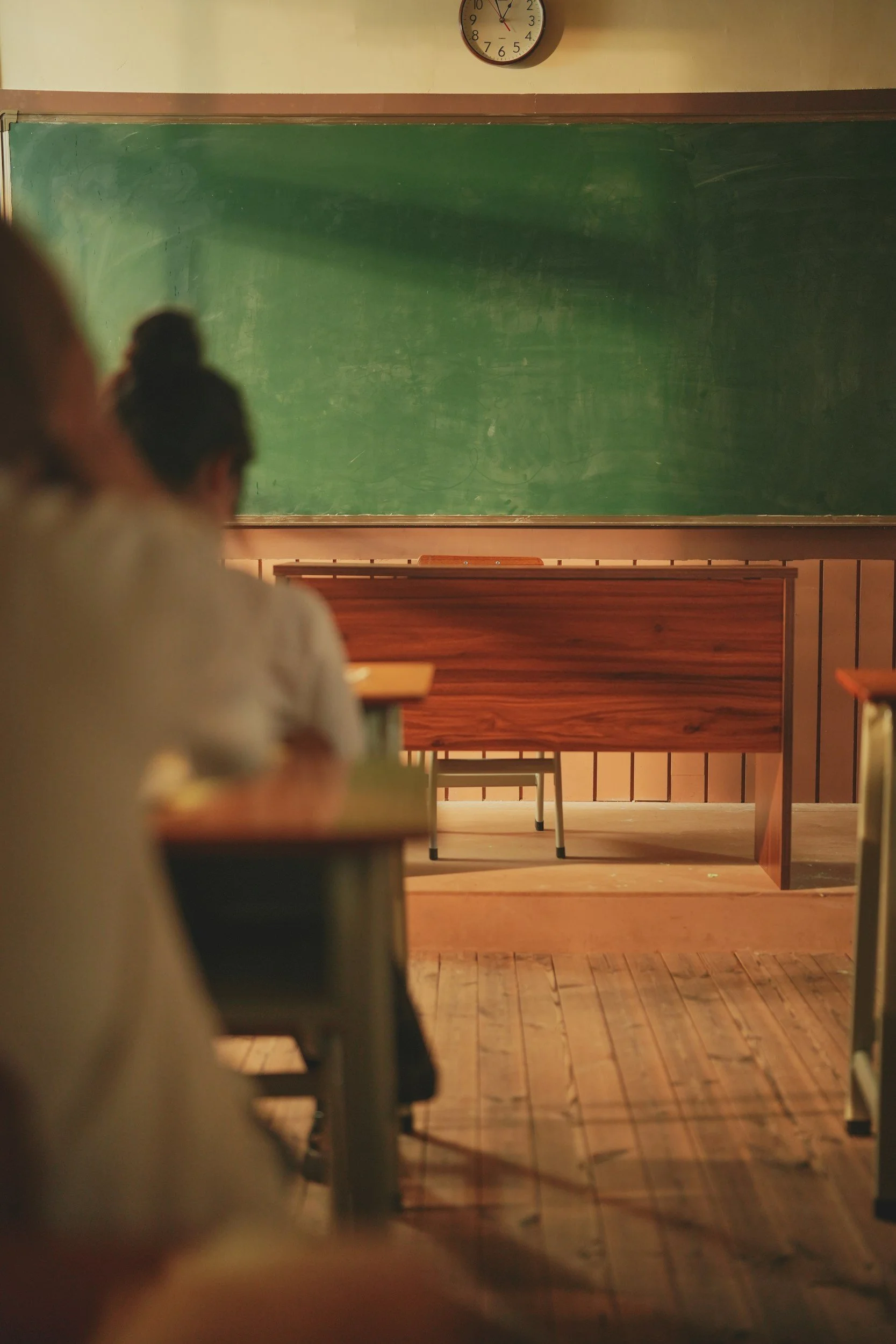
“Validation, I think, was one of the most important things, to let her know that, yeah, we all struggle with things, and your struggles are real, and they're hard. They're very, very hard.”
- Peter
-
Episode 8
The Power of Presence: Peter’s Classroom as a Safe Haven
Summary
One of Brenna’s teachers, Peter, lets her eat lunch in his classroom and checks in with her regularly. Brenna remembers Peter’s support years later. Sarah Clark, a psychologist at Dartmouth Health, offers additional insight on the needs of teens like Brenna. She emphasizes that for those with OCD, simply being present and providing validation is often more powerful than attempting to "fix" symptoms. The episode explores how educators like Peter can support mental health by creating safe, non-judgmental spaces and understanding that intrusive thoughts require compassion rather than stigma.
Transcript:
Charlotte: Welcome back to Seen & Heard, a podcast about teen mental health. I'm Charlotte, your host, and this is Episode 8. If you're just joining us, please start at the beginning with Episode 1. You'll learn the most that way.
Charlotte: Today, we get some additional perspectives on Brenna's story. As you heard, Brenna valued a relationship with a middle school teacher who let Brenna visit his classroom outside of class hours.
Charlotte: She felt safe there. She was able to perform the compulsive behaviors that she'd held in all day. And she was able to do so without feeling judged.
Charlotte: Her teacher's name is Peter. Here's what he liked to tell his students.
Peter: My door is open and you're welcome to come down anytime.
Charlotte: A lot of kids appreciated the invitation. It was a small school, no cafeteria.
Peter: So when kids had lunch, or when they had their snack at recess, they could sort of go wherever they wanted. And there were just sort of over the years, there were some kids who would gravitate towards my class.
Charlotte: Somehow, Peter created an atmosphere where students could unwind and be themselves.
Peter: And I think for those kids who sometimes just needed to step away from everything else, it felt like a great place. I recognized that early on in my time, and just loved to have kids come down and unwind and just be goofy or be sad or whatever it was that they needed at that time.
Peter: And so I definitely had had a number of kids over the years who did seem to have varying types of anxieties, whether it was low self-esteem or whether it was learning to get along with peers.
Peter: Brenna, she chose to use it pretty much throughout her time in the middle school.
Charlotte: Peter acknowledges he knows little about mental health. He didn't know much about what Brenna faced.
Peter: I don't remember her calling it OCD. And I knew so little about OCD at the time. We all just thought of it as anxiety of a sort.
Charlotte: But he noticed Brenna as a student.
Peter: And Brenna was, you know, she's incredibly bright and she was always a very high achieving student. But I realized through the way she was talking about the time she was spending on homework that it was an inordinate amount of time.
Charlotte: And so Peter began to understand Brenna's perfectionism, and how much it demanded of her. Over time, he learned more.
Peter: Brenna definitely was the one that taught me a lot more about how all-encompassing anxiety could really be. And I definitely learned with her, through her experiences, and through her really impressive advocacy for herself, her willingness to talk to me and share what she was feeling.
Charlotte: He learned how overwhelming OCD and other mental health challenges can be.
Peter: I knew that they were impactful, but I didn't know they were so all encompassing, and so huge at that age especially.
Charlotte: He also observed periods of high intensity for Brenna.
Peter: Like the anxiety, the pressure that she was feeling seemed to really be pressing her down. I remember there was a stretch where I was actually sort of checking in with her almost daily in the afternoons just to make sure that she had done okay that day.
Charlotte: Peter had once faced some mental health challenges of his own. So, he had some intuition about what Brenna needed.
Peter: Validation, I think, was one of the most important things, to let her know that, yeah, we all struggle with things, and your struggles are real, and they're hard. They're very, very hard.
Peter: I think more than anything I was just trying to prop her up to make sure that she knew how competent and how incredible she was as a person and that she was doing nothing wrong and that whatever struggles she was having were real and were valid and didn't in any way diminish her.
Charlotte: The relationship proved quite rewarding for Peter.
Peter: She definitely would tell me that I was helpful, but it's been fun because we've maintained contact over the years and she's been wonderful about telling me that it really was helpful in those years.
Charlotte: Peter and I talked about what teachers can do to support students. He shared that he felt fortunate to be able to help Brenna.
Peter: He was in a small school, so small that he saw the same students for three years.
Peter: I was the only English teacher for middle school students. And because I think my subject is one that fosters a lot of discussion around life experiences just through literature, I had the real luxury of getting to know students as whole people.
Charlotte: He wishes more teachers could have the luxury of time.
Peter: to have the space to know their children, their students more than just as learners, to get the time to learn what their pet peeves are, to learn what their idiosyncrasies are, to learn what their fears are, to learn what their hopes and dreams are.
Charlotte: Beautifully said.
Charlotte: I talked to Sarah Clark, a psychologist who treats OCD at Dartmouth Health. Right away, Sarah echoed Brenna. She shifted focus from the compulsive behaviors to the obsessive thoughts.
Sarah: They're incredibly distressing to people, but you can't see them, as an outsider. So, I think that it's kind of like this invisible battle that you're going through.
Charlotte: Incredibly distressing. I can only imagine. As a small child, Brenna worried that she'd be responsible for the death of loved ones.
Charlotte: People with OCD are often afraid to share their obsessive thoughts. They think that nobody will believe them.
Sarah: I think it can be incredibly scary for younger people who have intrusive thoughts, because they often don't know what's going on, and it can take a long time to figure that out. And so they start to feel like I'm not normal. Something is wrong with me.
Charlotte: We asked Sarah how caring friends can lend support.
Sarah: And if that person can even just be there with you and sit with you while you have your OCD symptoms, that's more powerful than any words they could probably say.
Charlotte: Just be there and sit with you. Simple, silent, and powerful. Sarah's advice to adults, including parents, is similar.
Sarah: If they are just sitting with them during it as well, which can be really powerful, showing like I am here for you right now.
Charlotte: Also, acknowledge what someone with OCD is experiencing.
Sarah: So I think families validating that it's scary, validating that it's distressing, can be really meaningful to kids. I really try to teach parents to be caring and understanding and not stigmatize the intrusive thoughts.
Charlotte: On the other hand, telling someone that their obsessive thoughts aren't real, or telling them to stop their compulsive behaviors, does not work.
Sarah: If you say, just stop that, it's not going to help your child. They're not able to just stop it. Otherwise, they would have already done that because who wouldn't ... if they could say, just stop?
Charlotte: We talked with Sarah about OCD treatments.
Sarah: I think the most well-known treatment for OCD is exposure and response prevention.
Charlotte: Exposure and response prevention. Patients practice sitting with their obsessive thoughts in a controlled environment, with a therapist. The goal is not to make the thoughts go away.
Sarah: So I really try to teach them: This is temporary distress. It's more about learning to tolerate the distress and knowing that that distress will go down over time. It's not necessarily about dispelling the beliefs, because when you fight back with OCD, it makes it worse.
Sarah: We say, "I'm going to sit in the distress of my obsessive thought, and it's going to go away, and I'm not going to fight against it."
Sarah: I often have people name it. That's part of the protocol, having you name your OCD. So people can name it Mr. Mean Guy or something. And then they'll say like, "Mr. Mean Guy, I see that you're here. I am not going to engage with you right now."
Charlotte: Some patients and families resist this approach.
Sarah: It is really scary for kids and families to hear about, and sometimes they're very hesitant to try it. And so, I always try to meet the family where they are and go very slowly.
Sarah: I will never ever start with the biggest fears ever. I will start with things that are, on a zero to 10 scale, like a one or a two in distress.
Sarah: Once they get really, really used to tolerating that lower distress amount, we go up incrementally.
Charlotte: It takes time, but success feels great.
Sarah: When they do the exposures, and afterwards, they're like, "Oh my gosh, I did it. I'm so proud of myself." And that's like the best feeling ever when you get to see that.
Charlotte: Ultimately, the goal is to put the patient in control of their OCD, not the other way around.
Sarah: Even if you still have OCD, you can learn how to deal with it, and you can learn good ways of coping that make you feel better.
Sarah: I don't think it has to control you. And I think it feels very all-encompassing and all-controlling, especially when it first starts, or when it goes through a period where it's worse. It feels like that, but teaching kids that it does not have to control you ... I think that can be really powerful as well.
Charlotte: Sarah made one more observation. People with OCD need to know: They are not alone.
Sarah: I often tell kids, I have been working with kids like you for 11 years, and I have seen so many kids get better, and not struggle as much with their intrusive thoughts, and it's totally normal to feel really stuck in these thoughts.
Charlotte: And, there are ways for people with OCD to connect with others.
Sarah: There's a letter writing program, where you can receive a letter from another child who has OCD, which is really cool and can feel very validating.
Charlotte: We'll put a link in the show notes so you can learn more.
Charlotte: Next episode, I'll talk this all through with Lucy.
Charlotte: This podcast has been brought to you by the Departments of Psychiatry and Pediatrics at Dartmouth Health. Hosted by Charlotte Bausha. Special thanks to all our guests. Editing by Kay Jankowski, Julie Balaban, Lucy Pilcher, Logan Paluch, Hanna Brooks, and Charlotte Bausha. Script development, audio production, and music composition by Chris Trimble and Treehouse Audio Productions. Please see the show notes for more information.
episode 9. Defining the Self:
Navigating Identity After a Diagnosis
With a focus on Brenna’s experience, Charlotte and Lucy contrast how society talks about mental and physical health and the negative impact that difference can have on how people with mental health diagnoses see themselves. Lucy shares techniques to help teens understand they are whole beings beyond their struggles. The episode also highlights the importance of individual coping strategies while addressing the challenges of masking symptoms and the courage required to ask for help.
“When you think about mental health, it can take up so much space because it impacts how you move through life every single day. And it can feel like that is the most important or most powerful piece of you.”
- Lucy Pilcher
-
Episode 9
Defining the Self: Navigating Identity After a Diagnosis
Summary:
With a focus on Brenna’s experience, Charlotte and Lucy contrast how society talks about mental and physical health and the negative impact that difference can have on how people with mental health diagnoses see themselves. They discuss how a diagnosis can feel like a limiting label rather than just one piece of a person's life. Lucy shares techniques to help teens understand they are whole beings beyond their struggles. The episode also highlights the importance of individual coping strategies while addressing the challenges of masking symptoms and the courage required to ask for help.
Transcript:
Charlotte: Welcome back to Seen & Heard, a podcast about teen mental health. I'm Charlotte, your host, and this is Episode 9. And here's a friendly tip: You'll get the most out of this podcast if you start at the beginning, with Episode 1.
Charlotte: I'll be talking with Lucy shortly. But first, I want to say that for me, Brenna's story strongly reinforced the themes from my previous conversation with Lucy, back in Episode 6.
Charlotte: What did Brenna need from a supportive adult? A feeling of safety, and a feeling of validation.
Charlotte: Note that Peter, her middle school teacher, gave her both, even though he didn't know about her OCD, and even though he admits he doesn't know much about mental health. He simply said, "Sure, you can hang out during free time in my classroom." He let her be herself, and he acknowledged her fears. Brenna still remembers him nearly a decade later. Talk about impact!
Charlotte: And, what did Brenna find unhelpful? Anything that felt like the opposite of validation, like telling her that her fears weren't real. Her inner thoughts terrified her, and she needed, really needed, others to see that.
Lucy: When adults focused on visible symptoms, the compulsive behaviors, it made Brenna feel like she was a problem to be fixed. It made her feel like what was going on inside of her was invalid.
Charlotte: So, her story reinforces the basics of providing support. Start by creating comfort and safety. Then, listen, receive words, and validate emotions.
Charlotte: Brenna's story also offers us some new topics. It's the first story that features a specific mental health diagnosis, OCD. We heard Brenna describe her efforts to develop a sense of self, an identity, that puts the diagnosis in its proper place, as one thread in the tapestry of what makes Brenna Brenna.
Charlotte: I asked Lucy about reactions to receiving a diagnosis.
Lucy: Sometimes people are like, "Oh, this is great. This explains what was going on with me this whole time. It wasn't that I was broken or there was something fundamentally bad or wrong. It was that this thing was happening."
Charlotte: But the reaction is not always positive.
Lucy: For other people, it can feel like a label. That's another label, or this means that I have something wrong with me.
Charlotte: Interesting, right? Two opposing reactions. For some, it's like, "This explains everything." It's a relief. They no longer have to worry about what's causing their distress. For others, it's a confirmation that there really is a problem. Some people have both reactions, or shift back and forth.
Charlotte: How others react to a diagnosis can matter a great deal. Sometimes it makes the diagnosis seem larger.
Lucy: And it's interesting when we think about it compared to physical health. Like, often you'll hear, and I think we've gotten better at this in the psychology world, but you'll still see it in the media, of people saying like, "Oh, he's a schizophrenic," or "She's bipolar," or, "She's OCD," and giving somebody that label. Whereas we don't say like, "Oh, she's cancer," right? We say she has cancer, she has heart disease.
Charlotte: Small language change, big difference. Labeling people makes their diagnosis feel more significant. Some even feel as though it defines who they are.
Lucy: When you think about mental health, it can take up so much space, because it impacts how you move through life every single day, and it can feel like that is the most important or most powerful piece of you.
Charlotte: Lucy works with patients to reduce the enormity of a diagnosis.
Lucy: Doing what you can to acknowledge that it is a piece of you, right? If we fight against this thing that's a piece of us, that's just gonna make the distress harder. But sort of putting it in its place, containing it, right? Yes, this is a piece of me. It's something that I'm gonna carry along with me, but it's not gonna dominate everything that I am.
Charlotte: She also explains what a diagnosis is.
Lucy: It's a way of saying, "This is one piece of what you're struggling with, and we have a name for it. It's PTSD or it's depression, but it's not all that you are. And there's things that we can do to support you with this."
Charlotte: Lucy also explained a technique she uses to make a diagnosis feel less overwhelming.
Lucy: In therapy, I do this thing with a jigsaw puzzle. It's like a picture of a jigsaw puzzle. And in it, I encourage people to write like all the parts of themselves. And it's this way to explore that all of us are whole beings. We're not just one thing. So, I'm not just an athlete. I'm not just a good student. I'm not just OCD. I'm many, many things.
Charlotte: Adults have a role here. You don't have to be a trained therapist to remind teens that all parts of themselves matter. You don't have to be a trained therapist to affirm that you see so much more than a diagnosis.
Charlotte: And remember, validation. "Those symptoms must be very difficult," or "It makes sense that you feel that way, given the situation." Tell them: "You are loved, even on your hardest days," or "I see how hard you're trying, and I'm proud of you."
Charlotte: All of this can make a big difference.
Charlotte: There's a detail in Brenna's story that stuck with me, one of her coping strategies. She went to the bathroom and stayed for a while, alone. She felt safe and comfortable. Sometimes, she counted tiles to focus her mind. It reminded me: People have a wide range of strategies for coping with distress.
Lucy: I would urge anybody to really consciously think about: When do I feel at peace? What thing am I doing? Or, where am I? Or, who am I with when I feel more peaceful or more content or more calm? And to go from there. For some people, it's like being out in nature. I love to be out in nature in any way. Just that feels soothing to me.
Lucy: I also run. And so if something's bothering me or I'm feeling uncomfortable at something, I'll tend to run, and think about it while I'm running, and I find that that helps. There's something about the energy of being outside and moving my body.
Charlotte: So, running and nature? Those are Lucy's favorites. Mine are yoga, rock climbing, horseback riding, and spending time with my dogs. When I was younger, it was all about cross-country running, basketball, lacrosse, and rugby. For others?
Lucy: Creativity is always a great outlet and a way to self-soothe. Moving your body tends to be helpful. But for some people, connection with others is soothing, just the act of being around other people.
Charlotte: As an animal lover, I just had to talk with Lucy about pets.
Lucy: Absolutely. I've seen that so many times with kids, teenagers, and adults. And there's evidence to prove it. Spending time with pets can be really therapeutic. And you're right. You can tell your pet anything and they're not going to judge you, or talk back to you, or tell you to feel differently. They're just there to absorb it.
Charlotte: Some people look to mindfulness or meditation for calming. Lucy shared some thoughts about how to stay on track.
Lucy: We get stuck in this place of thinking that mindfulness has to be sitting quietly by yourself meditating, and it really doesn't. I have a friend and a colleague who ... Swimming is really meditative for her. And so, she's moving her body. She's in the water. But there's something for her that feels really peaceful and calming about being in water, and she absolutely could not sit and meditate in a room by herself.
Charlotte: Lucy suggests focusing on the goal of meditation rather than getting too caught up in trying to do it in a particular way.
Lucy: We're really just talking about the opportunity to turn down the noise in your brain and find some peace for a moment. I think it's helpful to have as many tools in your toolbox as possible. So, it's great to have things like, I like to listen to music or I like to use a stress ball.
Lucy: It's also important to have some things that you can do that don't require anything. So you can do it no matter where you are. If you don't have your phone with you, you don't have anything with you, you still have some of these ways to ground yourself, like the breathing exercises and the grounding techniques, things like a butterfly hug, which is basically giving yourself a hug.
Charlotte: So, it's good to know lots of ways to find calm. But, avoid putting too much pressure on yourself.
Lucy: We talk about self-care, and it's like you have to take half-an-hour to do your self-care every day. And then, personally for me, I'm like, "Well, I failed, because I didn't have time to fit in my self-care today." And it just perpetuates this idea that I wasn't good enough today because I didn't make time for my self-care, which in itself... wildly unhelpful, right? Putting pressure on something that is supposed to help you.
Charlotte: Our next topic: masking. Brenna expended a lot of energy trying to mask her OCD symptoms, so that others didn't notice.
Lucy: We all put a lot of energy into seeming OK on the outside. And what that means is that nobody can tell that there's other struggles going on.
Charlotte: Right. Brenna hid her symptoms quite well.
Lucy: So I think that that experience that Brenna had is pretty common for those high-achieving students that just get kind of lumped into that, "Oh, they're good, they're fine."
Charlotte: But Brenna was not OK on the inside.
Lucy: Sometimes kids who are high achievers hold themselves really tightly. They're doing everything they can to keep it all in and continue to succeed. And so sometimes I look for that, and that can just look like an intensity.
Charlotte: For some teens, success at school, and success at masking symptoms, can make it harder to acknowledge difficulties or talk about struggles.
Lucy: So for example, if you're a high achieving student, or you're an athlete, and everybody all the time is telling you, "Oh my gosh, you're such a great student. Wow, you're such a great athlete. Wow, you are just amazing."
Lucy: It's really hard for that person to say, "Actually, maybe I'm not so amazing. Maybe I'm having a struggle. Maybe, actually, I'm not as successful and high achieving and perfect as you all seem to think I am."
Charlotte: Leaving those struggles on the inside is not the best strategy. Remember what we've talked about? Step one: Express yourself. Step two: Express yourself to another person.
Charlotte: But that does mean asking for help. And I don't think many people are good at asking for help, honestly. I've yet to meet somebody that says, "Oh, I always ask for help, and it's really easy, and I don't have any issue with it."
Charlotte: And I think it's because we judge ourselves for needing help. There's this mentality of, "I should be able to do this. I should be able to cope. I should be able to be good enough that I shouldn't need help."
Charlotte: The only way to get better at it is to turn the volume down on that voice that tells you, "You shouldn't need to ask for help," and then practicing asking. "I need some support with this," whether it's a friend or an adult or a therapist or a doctor.
Charlotte: Otherwise, the struggles might get larger, and larger, and start to feel overwhelming.
Lucy: It's a scary place to be. Feeling like your mental health is large and in charge can feel really disempowering. And so I think that, a couple things, acknowledging that that's what's happening, and finding a way to ask somebody for help.
Charlotte: Remember, it can feel a lot easier to ask for help if you are specific about what you want. You can say "I'm having a tough time. Can I just sit in here quietly?" Or, "Can I tell you something and you just, you know, listen and not say anything?"
Charlotte: Next episode, we'll meet our fourth and final young guest. See you then.
Charlotte: This podcast has been brought to you by the Departments of Psychiatry and Pediatrics at Dartmouth Health. Hosted by Charlotte Bausha. Special thanks to all our guests. Editing by Kay Jankowski, Julie Balaban, Lucy Pilcher, Logan Paluch, Hanna Brooks, and Charlotte Bausha. Script development, audio production, and music composition by Chris Trimble and Treehouse Audio Productions. Please see the show notes for more information.
episode 10. Navigating the Storm: Lauren’s Story of Overcoming Trauma
After a difficult family experience, Lauren is ambushed by traumatic flashbacks at school. In this episode, Lauren shares her journey living with PTSD, anxiety, and depression following a traumatic domestic event. She discusses how she transitioned from feeling "frozen" by flashbacks and panic attacks to finding healing through personal coping strategies. Lauren highlights the importance of patience, open communication, and destigmatizing mental health challenges for teens.

“I used to think, why did this happen to me? And now I know, it happened to me so I could be here.”
- Lauren
-
Episode 10
Navigating the Storm: Lauren’s Story of Overcoming Trauma
Summary:
After a difficult family experience, Lauren is ambushed by traumatic flashbacks at school. She learns several practices that she can do on her own that prove surprisingly powerful. In this episode, Lauren shares her journey living with PTSD, anxiety, and depression following a traumatic domestic event. She discusses how she transitioned from feeling "frozen" by flashbacks and panic attacks to finding healing through personal coping strategies like yoga, journaling, and the support of her grandmother. Lauren highlights the importance of patience, open communication, and destigmatizing mental health challenges for teens.
Transcript:
Charlotte: Here we are, already. Our tenth episode of Seen & Heard. I'm Charlotte, your host. Friendly tip for those who just found us: Please listen to the episodes in order, starting with Episode 1.
Charlotte: Today, we meet Lauren, a junior in high school. Lauren can often be found at an assisted living home. She has a job caring for people with dementia. She's passionate about helping the residents and listening to their stories. She's aiming for a career in nursing.
Charlotte: Lauren's mostly happy, but she's been through some tough times. Back in elementary school, she struggled with what she now recognizes as anxiety and depression. Then, an event in seventh grade led to more severe challenges.
Charlotte: Since then, she's made a ton of progress ...
Lauren: It's like I was there and now I'm here. That's amazing.
Charlotte: And there's a lot to be learned from Lauren's journey, from there to here.
Charlotte: Before we go on, a warning. This material may be difficult. We'll be talking about domestic violence, panic attacks, and PTSD. Please treat yourself with kindness, and consider listening with a friend. And whenever you need to, press pause.
Charlotte: Remember, if you or a loved one feels distress or has thoughts of suicide, call nine-eight-eight. You can find more resources in the show notes.
Charlotte: We'll now be stepping back a few years, into the COVID-19 pandemic. Lauren's parents dropped her off to celebrate New Year's Eve with some relatives: her grandparents, her uncle, and three cousins. One of the cousins was an older boy and the other two were younger girls. It was after midnight. The New Year, 2021, had arrived.
Lauren: I was upstairs with my grandmother and my older cousin. The kids had gone to bed, and we were upstairs, and my grandma was reading to us, because we have this little tradition where whenever we come up, she'll read us a book. And I even remember the book. It was, I think it was, Count Bunnicula.
Charlotte: Lauren shared that there's a history of drinking in her family, and that family gatherings could get rowdy. Sometimes she heard shouting matches. Lauren remembers feeling uneasy that night. And then ...
Lauren: You just hear like bang bang. And I told her, you should go check on that, because my grandfather is very prone to falling. But she started reading again. And I was trying to be very confident in what she was saying because I trusted her. But then a couple of minutes later you hear it again. But this time it just doesn't stop.
Charlotte: Lauren's grandmother stopped reading.
Lauren: She just threw the book and was like, "Stay up here," and shut the door, and she ran downstairs, and you just kept hearing it.
Charlotte: Lauren could hear her uncle and grandfather fighting, and maybe doing more than just shouting.
Lauren: There had always been fights like that, in my house. And it had never gotten physical.
Charlotte: Lauren could see that her cousin was getting very worried. And then
Lauren: My cousin, who's older than me, started having a panic attack. And I called my dad, and I put him on the phone with my cousin, because my dad frequently has panic attacks. And he talked him through his panic attack and called the police.
Charlotte: Lauren went downstairs. She saw that her uncle was fighting, physically, with her grandparents.
Lauren: And I remember running downstairs, and just my grandparents being there. I was twelve ... eleven or twelve. And I just remember, like, "Stop," like screaming "Stop!" And my grandmother was trying to protect my grandfather, and it was very traumatic.
Lauren: There's blood everywhere, and my two favorite people in the entire world are getting the crap beat out of them. That's something I never would have thought to happen in my entire life.
Charlotte: And then, Lauren just reacted.
Lauren: I just remember, I balled up my fist and I started hitting him.
Charlotte: Not long after that ...
Lauren: The cop showed up, and I ran upstairs, and I tried to keep the girls entertained, and it was a lot. I was running back and forth between trying to keep these two little girls contained in their room, on their tablet, balancing my cousin's panic attack, my own panic attack, and what was happening downstairs.
Charlotte: There weren't any injuries that required immediate medical attention. The police took Lauren's uncle away to sober up and then released him. Lauren spoke with her uncle the next day.
Lauren: I remember, it had to have been six o'clock in the morning, and he came in, and he said, "Come here, come sit on the couch with me." And he apologized for me having to see it but not that it happened.
Charlotte: He apologized she had to see it, but not that it happened. And I felt so angry, and that's why I was so angry. Because how could you say that to someone? And it just didn't make any sense to me.
Charlotte: Lauren's anger towards her uncle? That was just one of her challenges after New Year's Eve. She also started to have some difficult experiences at school.
Lauren: We'd be learning math one minute, and then I'd be having a full on flashback to something, and I'd start crying. It was very difficult for me to process what was happening to me.
Charlotte: Lauren is open about what her traumatic flashbacks felt like.
Lauren: It's very much like being stuck in a box. If you have claustrophobia, that's what it feels like.
Lauren: It's like watching a movie through your eyes, literally. Around the edges, you can see like the classroom and what's happening. But for the most part, all you can see is what's in your flashback. And it's very scary to just not know how to get yourself out of that. And it's just like you're sitting there, and you can't move, and you can't speak, and you can't blink.
Charlotte: You can't move, you can't speak, and you can't blink.
Lauren: Panic attacks are terrifying. I got them a lot. It's like throwing yourself into like a freezing cold pool. That's what it feels like to dissociate and go into a state of panic. And you're just stuck there, you're frozen, and you can't do anything but lean into it.
Charlotte: She was stuck there. She felt frozen. Lauren kept having flashbacks, and she didn't know what to do. She was twelve years old, and she was scared.
Lauren: I remember thinking it was a really bad thing. This shouldn't be happening to me. Something is wrong with me.
Charlotte: Eventually, Lauren reached out to friends.
Lauren: I had messaged a friend. We had one of those giant group chats with ten people in it. And I had been friends with all of them since elementary school. And I remember messaging, "Something is wrong with me."
Charlotte: One friend responded:
Lauren: "I think you have PTSD."
Charlotte: PTSD, post-traumatic stress disorder, is a mental health condition that results from experiencing or witnessing something terrifying. Symptoms include nightmares, flashbacks, severe anxiety, and uncontrollable thoughts.
Lauren: And I started looking into it and I was like checking off all these boxes, flashbacks, and anxiety, and depression.
Charlotte: At first, Lauren found it difficult to accept that it might be PTSD.
Lauren: I grew up knowing about PTSD. My grandfather was a Marine. So, we were very open about soldiers having PTSD and all that. And he had friends who had PTSD.
Lauren: So, I was completely under the impression my entire life that it was something you could only get when experiencing something so extreme, like war or anything like that. So I was in complete denial of it happening to me at all.
Lauren: I really sat with it for a while, and I looked up a lot of the symptoms, and I remember searching for people who were the same as me and didn't go through a war or anything like that.
Charlotte: Meanwhile, the flashbacks and panic attacks continued.
Lauren: Almost anything can trigger it. I learned that very quick. It could be something you see, or something you hear, a loud noise.
Charlotte: Slamming a locker door, for example, or even something much quieter.
Lauren: Someone clicking their pen too much and causing you to get angry, and then that anger sends you into a spiral.
Charlotte: Eventually Lauren overcame her reluctance to ask for help. She spoke with her mother.
Lauren: I've never been good at asking for help. And, she was kind of in denial about it too.
Charlotte: Neither of Lauren's parents felt optimistic, but her mom made an appointment.
Lauren: Therapists have never really helped my mom or dad or anything, so they're very skeptical about how it would help me. But she did it for me anyway, and I'm very grateful about that.
Charlotte: Lauren vividly remembers the moment she received her diagnosis.
Lauren: I remember the psychiatrist listing out what she had diagnosed me with, and she said, "Severe anxiety, severe depression, severe PTSD," and I'm sitting there thinking, I am really messed up.
Charlotte: Lauren was afraid, but as I discussed with Lucy, emotions after a diagnosis can be complex.
Lauren: And it was the most terrifyingly liberating moment. Because I knew what was wrong with me, but I had no idea how to cope with it.
Charlotte: Fear, liberation, and other emotions, like hope and regret, all mixed together.
Lauren: I never really knew that it was anxiety until I actually went and talked to somebody. And I was like, "Man, I've had this for so long and it could have been treated for so long, but I've just lived with it."
Charlotte: After the diagnosis, Lauren continued to struggle at school.
Lauren: I remember one time in specific, I was sitting in class, and I started sobbing, and everyone else could see what was happening. And I kept trying to tell them what was happening to me. They just kind of ignored it.
Charlotte: Lauren's interest in schoolwork declined quickly, and she missed a lot of school.
Lauren: I think I was only present for like one hundred school days. They kept sending truancy notes, and it was just really hard for me to even leave the house. After that trauma, there was a period of about two years, because of COVID and all that, that I just stayed in the house, and I didn't leave, because it was too much anxiety. I got that stomach ache and those heart pains or chest pains, and I was just, I didn't want to go out.
Lauren: I don't know if the teachers liked me that much. I wouldn't do my work. A lot of the time, for most of the subjects, mostly math, I had no clue what I was doing. So I wouldn't do the work, and I think that that caused them to see me as a troubled kid.
Lauren: I went back to school occasionally, but not as much as I should have. And I really just laid in bed. And I was on my phone a lot, and I'd play video games, occasionally read.
Charlotte: And, her social life? It shrank.
Lauren: I distanced myself from a lot of my friends. I've had one best friend who I've kept really close.
Charlotte: One best friend who she kept really close.
Charlotte: Lauren and her mom sought treatment during the pandemic. Finding an appointment wasn't easy.
Lauren: I think when I had called, or when my mom had called and asked them about getting me a slot, they said that I was honestly at the bottom of their list of needs.
Charlotte: Once they found someone, Lauren found therapy challenging.
Lauren: And then, I finally got a therapist, and it was very difficult for me to open up about a lot of my traumas. They're like, "You get like 45 minutes." I'm like, "It's going to take me a lot longer than that to get through what I need to get through."
Charlotte: One therapist left the area, and another said this.
Lauren: They even told me, "You aren't really opening up about anything. So, I think you might need another therapist."
Charlotte: This isn't unusual. Finding the right therapist can take a few tries. And then, therapy isn't always fun.
Lauren: I hate therapy.
Charlotte: Lauren is not the first person to feel that way. Therapy is hard. But she added this:
Lauren: I'm a very avid believer that therapy can help you.
Charlotte: Lauren also tried medication.
Lauren: They put me on a couple medications when I was first diagnosed for my anxiety. One of them worked for me. It really lowered my anxiety. But the doctor unprescribed it and told me that a lot of the people taking it were getting addicted to it, especially teenagers, and she was worried that I was going to get addicted to it.
Charlotte: So, under her doctor's supervision, she tapered off the medication. A few weeks later, before a school trip, she craved the medication, but then she thought this:
Lauren: If I needed that to get through a week, it wasn't really very healthy.
Charlotte: Lauren felt motivated to learn about, and then try, some activities that could help her heal. She succeeded.
Lauren: Finding yoga and journaling and all that has really helped me a lot more than a pill ever could.
Charlotte: These activities helped Lauren keep her mind in the present moment.
Lauren: You're in the middle of a flashback, or this massive anxiety attack, and you're putting your body to work by writing or doing yoga or something. So, your brain, it automatically switches to, "How can I do this?"
Charlotte: Journaling moved Lauren's thoughts from her head to paper, from inside to outside.
Lauren: I remember I saw this movie where she would write letters and seal them and burn them. And that's what I would do. I wouldn't keep what I wrote at all.
Charlotte: She wrote about her journey and her challenges.
Lauren: There was reflection, which was difficult, and then there were a couple times where I would write about how I could be better and how I could handle things better.
Charlotte: Activities like yoga and journaling can be helpful. They can be calming. But Lauren found that she also needed support from others, and she has a special connection with her grandmother.
Lauren: Me and my grandmother spend a lot of time together. I spend the weekends with her. So, we do just about everything together.
Charlotte: When Lauren was young, she and her parents lived with her grandparents. She and her grandmother ...
Lauren: We'd shop together and when I lived with her, we'd have weekly art nights and game nights and movies, and it was really nice.
Charlotte: Lauren's grandmother got her started with journaling.
Lauren: When I was really little, we'd go out to dinner together, and we'd have a little journal that I had decorated with her. And we'd write back and forth about like my parents' fights, or how I was feeling and all that.
Charlotte: They still enjoy movie nights.
Lauren: I grew up watching black and white movies with her, and she's terrified of any horror movie. So, I take great joy in putting a 1968 black and white slasher film on and just having her sit there through it. And she's just jumping every time someone turns a corner. It's hilarious.
Charlotte: Lauren remembers, vividly, the time she spent with her grandmother right after New Years.
Lauren: My grandmother was very influential. She took a lot of the beating in the fight, and she still came home smiling. She still had bruises on her face. And I remember her asking me to go with her to pick out concealer and the color correctors to hide her bruises. And she even turned that into something fun. She just made light of the entire situation, and we talked about it a lot.
Charlotte: So, Lauren found healing in yoga, journaling, and her grandmother. And today, she seems to be doing quite well.
Lauren: You'll see these poems and stuff where it was like life was so dull and now there's color. That is exactly how it is.
Lauren: It's so much better. I didn't take care of myself very well, and now I shower every day, I make sure I'm clean, and I do my little skincare routine to make myself feel better, and I go to work at a job that I really enjoy, and I'm living life to the fullest that I can.
Charlotte: More signs of progress: Lauren talks openly about what happened to her, and she's accepted the difficult chapters in her life.
Lauren: I used to think, "Why did this happen to me?" And now I know. It happened to me so I could be here.
Charlotte: Lauren's situation isn't perfect. Her relationship with her uncle has not healed.
Lauren: I'm angry at him for a lot of things now that aren't even related to that, but I don't like being angry at people. It just feels weird to have hate for someone.
Charlotte: So, Lauren avoids her uncle, at least for now.
Lauren: I've kind of just pretended that he doesn't exist.
Charlotte: Overall, Lauren is excited about her future.
Lauren: I never expected to be where I am. And since I was a kid, I dreamed about going into the medical profession, and I never thought I could do it. I was always told that it was an empty dream, and I always thought it was an empty dream.
Charlotte: She already works nearly full time with dementia patients.
Lauren: My favorite part about my job is hearing all these people tell me stories about their life.
Lauren: There's ones that are high anxiety like me, that I just really resonate with, and I can get to their level of anxiety, and be able to know how to navigate that better than a lot of the other staff can. And I love going into work and having seven or eight hours fly by and feel like 20 minutes, while I'm keeping so busy. And I love just walking with residents and being there for them when they need someone because they're confused.
Charlotte: Lauren recalls moments when she didn't think she'd recover. But she's glad she did.
Lauren: It's just something that you have to find. It's hard, but it's so worth it.
Charlotte: I asked Lauren what advice she'd give her younger self. A long pause, and then she said a lot.
Lauren: I would tell myself not to give up. I used to really think that I was very insignificant because of my mental health. Because there were nights where I'd sit up and I'd just be like, "Should I even be here? Because I'm not contributing anything, I don't have good grades, I don't do this right, I'm not a great kid. So why am I here?"
Lauren: And that was the hardest thing for me. And thinking that I was so different. So I think I would just tell myself that I should be here.
Lauren: And I have a great life ahead of me. And I think that's something that I really needed to know, because I didn't think that I'd be where I am today. I'm not as depressed as I used to be. I very rarely find myself depressed about anything. My anxiety has gone down a lot. It's definitely gotten better. I feel like I'm supposed to be here.
Charlotte: I also asked Lauren what she wants adults to know about children and PTSD.
Lauren: I think the biggest stigma is like, people with PTSD are violent. And we are not. We're just very hurt.
Lauren: It's like when you drop a vase, and it shatters, and you try and glue it back together. There's still cracks. There's always going to be cracks. It's very difficult for society to understand that a trauma as big as that, you cannot just bounce back from.
Charlotte: Lauren acknowledged that supporting someone with PTSD can be unpredictable.
Lauren: Be very patient. Healing isn't linear. Like there's going to be days where they're perfectly fine to go out, and the next day, you could have like some big plan, and it gets messed up because they're having a flashback, or it's just not the day.
Charlotte: But patience doesn't mean lenience.
Lauren: I was never called out on how I behaved. And, there was a lot of lashing out. And I always feel very bad about that when I think back on that.
Charlotte: Finally, Lauren spoke about how important it is to talk about mental health. She's seen the cost of silence.
Lauren: The men in my family, for the most part, really have the stigma around their mental health, so that really went unchecked. So, there was a lot of trauma going down.
Charlotte: She also sees that her friends are reluctant to talk.
Lauren: We lack empathy and the courage to speak to others about what's happening.
Charlotte: She's working on it herself.
Lauren: Now I'm very open about it. I don't care anymore. It used to be someone asked me how I'm doing, and I'd have to whisper, "I'm not doing great. I'm anxious." But I'm just open about it now. I'll shout about it. "I'm anxious today."
Charlotte: She's learned talking to friends is therapeutic.
Lauren: A lot of people think that being alone, when you're sad, is the key to getting not sad anymore. And for some people, yeah. But I find that if I'm sad, and I still push myself in a room full of people that I care about, I'm happy. And that sadness just goes away.
Charlotte: Lauren hopes that others will learn what she's learned.
Lauren: I think that if we have people that are willing to answer those hard questions, like "What was it like?", "How do you deal with it?", we're spreading awareness for people who have family members with PTSD or children, or they have PTSD themselves and how they can cope with it.
Charlotte: The Seen & Heard team shares that hope. Connection, and conversation, make a big difference.
Charlotte: Thank you, Lauren, for courageously sharing your story.
Charlotte: Next episode, we'll get some additional perspective on Lauren's story. See you then.
Charlotte: This podcast has been brought to you by the Departments of Psychiatry and Pediatrics at Dartmouth Health. Hosted by Charlotte Bausha. Special thanks to all our guests. Editing by Kay Jankowski, Julie Balaban, Lucy Pilcher, Logan Paluch, Hanna Brooks, and Charlotte Bausha. Script development, audio production, and music composition by Chris Trimble and Treehouse Audio Productions. Please see the show notes for more information.
episode 11. How Teens Heal:
Understanding Trauma and the Path to Growth
Dr. Kay Jankowski, a psychologist specializing in childhood trauma, provides clinical insights into Lauren’s journey. In this episode, Kay defines trauma and explains how PTSD often manifests through flashbacks, panic attacks, and isolation, which can make a teen’s world feel smaller. She emphasizes the importance of trauma-informed therapy, nervous system regulation, and the role of a supportive "non-parent" adult in fostering post-traumatic growth.
“We have to confront our trauma. We have to be able to speak about it. We have to be able to understand our feelings related to it and the beliefs and the ways in which it's affected us, in order to move through it, and to get to a place where we can live the lives that we want.”
- Kay Jankowski
-
Episode 11
How Teens Heal: Understanding Trauma and the Path to Growth
Summary:
Kay Jankowski, a psychologist specializing in childhood trauma, provides clinical insights into Lauren’s journey. She defines trauma as overwhelming situations that exceed one's ability to cope, noting that severity is determined by symptoms rather than the event itself. Kay explains that PTSD often manifests through flashbacks, panic attacks, and isolation, which can make a teen’s world feel smaller. She emphasizes the importance of trauma-informed therapy, nervous system regulation, and the role of a supportive "non-parent" adult in fostering post-traumatic growth.
Transcript:
Charlotte: Welcome back to Seen & Heard, a podcast about teen mental health. I'm Charlotte, your host, and this is Episode 11. If you just found us, welcome. And, please consider starting at the beginning, with Episode 1.
Charlotte: Last episode we got to know Lauren, and we heard about how much she valued her grandmother's support. We hoped to interview her, but some unexpected events got in the way. It's unfortunate. We all could have learned from her.
Charlotte: Instead, we'll move straight into our conversation with a mental health professional. Kay Jankowski is a Dartmouth Health psychologist who specializes in childhood trauma. We asked Kay how children respond, in the moment, to a traumatic incident.
Kay: One of the most common responses would be to try to hide, maybe put their hands over their ears to try to just kind of block everything out, and maybe not be thinking about anybody else in the house.
Kay: And then I think there's also a subset of kids that might move right towards the danger and might have gone in to try to break up the fight. And it's not to say that any of those are good or bad at all.
Charlotte: Fight or flight. Pure instinct. But Lauren kept a level head and helped her older cousin.
Kay: She contacted her father to talk to her other cousin about his panic attack, and to talk him through that to help him calm down. So, she certainly showed some good instincts in that situation.
Charlotte: Good instincts, but the experience frightened and overwhelmed Lauren, and she suffered for quite some time. And she couldn't understand what was happening to her.
Kay: Her understanding of trauma was combat trauma, which of course is one form of trauma, but there are many other kinds of trauma.
Charlotte: A lot of people speak casually about trauma, but few understand it.
Kay: And my sense is that it probably has been kind of watered down. And I think it leads to a lot of confusion for young people and adults about: What does trauma actually mean?
Charlotte: Think of trauma as ...
Kay: Overwhelmingly stressful situations or scary situations that overwhelm our capacities to be able to cope.
Charlotte: Keep in mind: The nature of the traumatic event doesn't determine the severity of the psychological impact. Combat trauma isn't automatically more severe than domestic violence, for example. Therapists judge severity by observing symptoms.
Kay: So, what are the kinds of symptoms that we're seeing? What are the ways in which this child has understood what's happened to them? And what are the ways in which it's causing problems for that child?
Charlotte: Trauma at home often produces severe symptoms in children.
Kay: One of the reasons why they can be so upsetting and traumatizing is because often caregivers are involved. And when we're children, we're completely dependent on our caregivers. And so, it puts kids in this very difficult situation where the people that they are completely dependent on are either in danger themselves, or, sometimes, are the perpetrators of danger against children.
Charlotte: And, Lauren experienced ...
Kay: what I would call pretty classic PTSD symptoms. So, she described flashbacks. She described panic attacks, particularly when she was triggered or reminded of something about the trauma.
Charlotte: Flashbacks and panic attacks feel awful, and they can lead to escalating dread.
Kay: There's a lot of fear of having panic attacks.
Charlotte: So, there's fear of fear. Many people have additional symptoms.
Kay: We become hypervigilant, which means that we are always scanning for danger, and we never feel quite safe in the world, and we don't know who to trust, including ourselves. A lot of people with PTSD feel like they're crazy because it's so hard to make sense of their experience.
Charlotte: Flashbacks, panic attacks, fear of panic attacks, hypervigilance, never feeling safe, not knowing who to trust, wondering if you are losing your mind. A lot, a whole lot. And, it's hard to make sense of. So, some people choose to ...
Kay: constrict one's life, and keep it as safe and limited as possible. It becomes easier and safer, at least in the short term, to isolate.
Charlotte: Living in isolation. Avoiding life. Lauren knew this well.
Kay: She loses the ability to really function well at school, to go to school, to get her work done. And she isolates herself. So, she doesn't hang out with her friends and doesn't do things that were at one point pleasurable for her. And that is a very common symptom. It's almost like her life shrinks.
Charlotte: Isolation breeds depression.
Kay: She just felt inconsequential, maybe, or that she just wasn't really contributing in the world. There can just be this sense of worthlessness.
Charlotte: What do I have to contribute? Why would people like me if I'm so messed up? Those are all really common beliefs that can come from trauma.
Charlotte: There's a recurring theme here. We've seen it several times now. Isolation makes things worse. Human connection makes things better.
Charlotte: In our next segment, we'll learn about how PTSD is treated.
Charlotte: Lauren didn't stick with therapy for all that long, but she did say she is a firm believer that therapy can be helpful. We talked with Kay about therapy for PTSD.
Kay: We encourage people to try to find a therapist who has experience treating trauma. And there are some treatments that have some research evidence behind them, things like Trauma-Focused CBT or Child-Parent Psychotherapy for younger children.
Kay: Core components include a lot of education about trauma and the nature of trauma, which really helps kids, and parents or caregivers, better understand what is going on, and why people have the symptoms and reactions they do, and how a lot of these reactions actually make sense given how stressful the situation was.
Charlotte: So, therapy moves you from "I'm overwhelmed, and I don't understand what's happening to me" to "Actually, the way I'm feeling makes sense." There's more.
Kay: Another important element to trauma treatment is learning skills and strategies for calming one's body down.
Kay: There are some intentional strategies that people can use that really help to calm the nervous system. So, for example, learning some breathing techniques, some relaxation strategies that can really help, and then other strategies that help with managing really intense emotions.
Charlotte: But, healing can't be rushed. If you care about someone with trauma symptoms, be patient.
Kay: Nobody can force somebody to do trauma therapy. It just doesn't work. It's really sitting with them and taking their lead, but also nudging them forward to do the trauma work.
Charlotte: Trauma therapy includes another aspect ...
Kay: some way in which the trauma is processed or reprocessed, which often involves narrating or telling one's trauma story to a therapist. And the therapist can really help with identifying where in that story might there be some beliefs that aren't true. They're often inaccurate, and they're certainly unhelpful.
Kay: So thoughts like, I did something to cause this, or this is my fault, or I'm completely one hundred percent powerless, and I have no control over my life or being able to keep myself safe, things like that.
Charlotte: Put another way, part of therapy is telling your story, and then eliminating the dubious beliefs that are embedded in your story, so that you can tell your story in a way that heals rather than hurts.
Kay: It's hard work. I think we have some natural inclinations to avoid pain.
Charlotte: And yet, this is how we move forward.
Kay: We have to confront our trauma. We have to be able to speak about it. We have to be able to understand our feelings related to it and the beliefs and the ways in which it's affected us, in order to move through it, and to get to a place where we can live the lives that we want.
Charlotte: A trauma therapist makes it safer to revisit your story and work on it.
Kay: When I work with kids, I sometimes use the analogy of a driver's ed car, where they're in the driver's seat, and I'm in the passenger seat, but I have the emergency brake.
Kay: It's important for anybody who is dealing with trauma, and trauma-related symptoms, to be able to be in the driver's seat.
Charlotte: You're in control. The therapist provides
Kay: that reassurance that somebody who's more experienced is sitting by them, and can help, and can intervene when necessary, or guide as needed.
Charlotte: We also spoke with Kay about Lauren's relationship with her grandmother.
Kay: Her grandmother was really there for her, not as her therapist, not asking her for all kinds of details about the trauma, but just sort of sitting side by side, and doing activities together, watching movies, doing art projects, being a safe, supportive, reliable adult figure for her in her life.
Kay: And we know that that makes such a difference for kids healing from trauma, to be able to have a supportive adult in their lives who isn't challenging their view of what happened.
Charlotte: Sometimes, parents or caregivers want to play this role, but this proves challenging.
Kay: A lot of child trauma is also family trauma. A lot of kids have complicated relationships with their parents. Sometimes, some of the trauma also involves their parents, which can make it even more complicated.
Charlotte: Even if the parents had nothing to do with the trauma, they often have their own strong responses to their kids' trauma. So, parents often feel like they should have done more to protect their child.
Charlotte: So, a light touch works best.
Kay: It doesn't mean that a parent isn't supportive or isn't a really critical person in their life. I don't mean that at all. But I do think that oftentimes kids really do respond well when they have somebody who's not quite a parent.
Charlotte: Not quite a parent. An additional supportive adult.
Charlotte: Kay felt lifted by Lauren's story.
Kay: There was a lot of hope in her message. She seemed like she was really engaged with life again, which was just incredibly hopeful.
Charlotte: She came a long way in a short time.
Kay: You know, there's actually a term for that: post-traumatic growth. And I think Lauren is a good example of how some people can really grow even stronger, and have more access to themselves, and to the person that they want to be, following an event like this.
Charlotte: Post-traumatic growth. It takes time and effort, but yes, you can grow through trauma, and Lauren knows it.
Lauren: It's like I was there and now I'm here. Like, that's amazing.
Charlotte: Truly amazing.
Charlotte: In our next and final episode, Lucy and I will talk one last time, and we'll wrap up the entire podcast. See you then!
Charlotte: This podcast has been brought to you by the Departments of Psychiatry and Pediatrics at Dartmouth Health. Hosted by Charlotte Bausha. Special thanks to all our guests. Editing by Kay Jankowski, Julie Balaban, Lucy Pilcher, Logan Paluch, Hanna Brooks, and Charlotte Bausha. Script development, audio production, and music composition by Chris Trimble and Treehouse Audio Productions. Please see the show notes for more information.
episode 12. The Art of Listening: Lessons in Support
In this final episode, Charlotte and Lucy explore how teens in social isolation often face a ruthless inner critic, noting that connection and expression are vital to turning down that voice. They revisit the importance of supporting teens without falling into the "fix-it" trap and they outline practical strategies for assisting with panic attacks. Ultimately, the episode emphasizes that being a supportive adult is not about being a hero who solves every problem, but about creating safety, validating emotions, and offering genuine curiosity to help teens find their own solutions.
“I think as adults, we have to like check our own egos and recognize that we don't have all the answers, but that we can offer ourselves.”
- Lucy Pilcher
-
Episode 12
The Art of Listening: Lessons in Support
Summary:
In this final episode, Charlotte and Lucy explore how teens in social isolation often face a ruthless inner critic, noting that connection and expression are vital to turning down that voice. They revisit the importance of supporting teens without falling into the "fix-it" trap. The episode outlines practical strategies for assisting with panic attacks, such as staying calm, naming the experience, and using sensory-based grounding techniques to bring someone back to reality. Ultimately, they emphasize that being a supportive adult is not about being a hero who solves every problem, but about creating safety, validating emotions, and offering genuine curiosity to help teens find their own solutions.
Transcript:
Charlotte: Welcome back to Seen & Heard, a podcast about teen mental health. I'm Charlotte, your host, and this is our final episode. If you just found us, welcome. The best way to listen is from the beginning, Episode 1.
Charlotte: In our final conversation, Lucy and I talked in detail about panic attacks. I wanted to understand how to help if someone nearby is having one. First, if you want to help, you have to understand what a panic attack feels like.
Lucy: Having a panic attack is an incredibly scary experience, and some people, when they're having a panic attack, literally think they're dying. They are in a state of real terror.
Charlotte: But, remember that ...
Lucy: Panic attacks pass. They don't last forever.
Charlotte: Usually they last several minutes. So, one of the most helpful things you can do is
Lucy: just staying with the person while the panic subsides and just sitting with them.
Charlotte: Just sit with them. And while you do
Lucy: The main thing is for you to stay calm, don't panic yourself, because that's just going to add panic to the situation.
Charlotte: Just that much? Incredibly helpful. But you can do more.
Lucy: So if you recognize somebody's having a panic attack, you can name it. "I think you're having a panic attack. Let's breathe together. Look at me, let's breathe together. In, out, in, out." And you are literally bringing them back into reality by breathing with them. So that's something you can do if you feel comfortable with it.
Charlotte: And then
Lucy: So, you can ask the person, "Has this happened to you before? Is there anything I can do to help?" They may be able to engage with you and give you a rational response. They might not.
Charlotte: Another helpful step is something called grounding: helping someone shift their attention away from their terrifying thoughts and towards the world around them. So, you're trying to ground someone in reality. A great way to do that is to call attention to their five senses.
Lucy: So some of the tools are, you can choose a color, and name everything that you can see that is that color. Sometimes it's stamping your feet on the ground. Really, it's trying to use your senses. So, anything you can do that's a sensory input. Some people will hold ice, or have a sour lemon drop in their mouth. You can use smells, really strong smells.
Charlotte: Also, there are some things to avoid. Don't tell someone to "calm down," for example. If they knew how, they would have already done it.
Charlotte: And, don't ask "What's wrong?" That's the opposite of grounding. It reinforces the focus on what's going on in the brain. Instead, remember that you want to shift focus to the world around them.
Charlotte: Last tip. Remember that panic attacks feel overwhelming. Don't add to it.
Lucy: It's ideal if it's just one person that tries to help, not multiple.
Charlotte: Think about ...
Lucy: what it would feel like to have three or four people coming at you saying calm down calm down calm down, right? That's just like extra sensory input for that person that's struggling.
Charlotte: Lucy and I also talked about PTSD. This term originated in the military, but, again, lots of people with lots of different experiences have symptoms.
Lucy: It just requires you to have had a perceived or real threat to your life or somebody else's life.
Charlotte: There are many misunderstandings about PTSD.
Lucy: It's been portrayed in movies a lot, but it's only a snippet of it. And so, what we see in the movies is like: There's a loud noise and somebody jumps under a table. And that's true. Hypervigilance is a part of PTSD. But it doesn't look like that for many, many people.
Charlotte: That's right. Some people have panic attacks, but experiences vary widely. If you want to understand what someone is going through, you have to ask, with patience and curiosity.
Charlotte: Next, we'll shift our focus to Lauren's period of isolation.
Charlotte: Lauren shared that she spent a lot of time alone. But isolation is damaging, and here's why: When we're alone, our inner critic gets louder.
Lucy: Everybody has an inner critic. That exists for everybody, throughout life.
Charlotte: Your inner critic. Think of it as a voice inside your head that sounds like a mean roommate who always points out your flaws, or a harsh coach who only yells at you, no matter how hard you work.
Charlotte: Remember this. Just because your inner critic speaks doesn't mean it has anything worthwhile to say. Some people say, "Don't believe everything you think." I like to add, "Especially your negative thoughts about yourself."
Charlotte: Do you remember what Lauren's inner critic sounded like? After two years of minimal contact with others?
Lauren: There were nights where I'd sit up, and I'd just be like, "Should I even be here? Because I'm not contributing anything. I don't have good grades. I don't do this right. I'm not a great kid. So why am I here?"
Charlotte: That's a loud and harsh inner critic. Nobody benefits from that. So
Lucy: It's about how much you turn up the volume on that inner critic. And there are some tools to turn the volume down.
Charlotte: The primary tool? You guessed it, express yourself. Talk about it to another person.
Lucy: Inner critics are fueled by that shame and secrecy. So, a way to combat it is to not keep it secret and not live in a place of shame, and to do what you can to, again, get that outwards. If you were just in your head and you listen to that inner critic, it's like a snowball that's just going to continue to get bigger.
Charlotte: The average teenager's inner critic is ruthless.
Lucy: It's a time when things can get internalized more. The feelings of shame can become much deeper in adolescence, and more conscious thoughts around like, I should have known better. The comparisons really kick in. So developmentally, it's a time when teenagers begin to look at their peers or look at other people, and those comparisons can be much more painful.
Charlotte: Social media can lead to even more suffering.
Lucy: Social media, and the constant feed of comparisons, is really hard for teenagers right now, because not only do they compare themselves to the people in their class or the people that are around, but they are flooded with these unreasonable expectations. It kind of messes with your sense of reality.
Charlotte: Next, we'll shift our focus to the role of the supportive adult.
Charlotte: We've talked quite a bit about how to be a supportive adult. First and foremost, you focus on comfort, safety, and connection. And then, you validate emotions. But what else?
Charlotte: The focus may be on the teen, but you also have to be aware of what's going on inside of you. You may have reactions. You may have some strong emotions. You may have concerns. You may have ideas. You may have solutions.
Charlotte: So: What do you do with all of that energy? Lucy's advice: Slow down.
Lucy: My biggest suggestion is to pause, even if what you're hearing feels really distressing to you, is to pause and ask some questions first. Let me understand more about what's happening. As hard as it is to do when every part of you wants to react, giving the message to the teenager that, "Hang on, I want to understand your perspective."
Charlotte: Mental health experiences are wide ranging. Each person is unique, even when the diagnosis is the same.
Lucy: With any mental health diagnosis, one person's experience of it is not going to be exactly the same as the others.
Charlotte: There's a lot of overlap, a lot of common symptoms, from one diagnosis to the next. It's messy. Therefore, when supporting someone
Charlotte: Don't jump to conclusions. "Tell me more about what's going on." As with all mental health things, I think we have to be curious and try to understand what that person's experience of it is, and not put our own labels, or judgments, or what we've seen on TV, onto that person.
Charlotte: What we've seen on TV, what we've read, what we've heard, or even what we've experienced ourselves.
Lucy: I think sometimes parents can project their own experience of something onto their child. So, if they experienced depression as an adolescent and then their child is experiencing depression, they might think, "Oh, I know exactly how you feel. So, I know exactly how to fix this." And that is invalidating to the person experiencing it at that moment. And it's not the same.
Charlotte: That's so important. Even when someone else's challenges sound like your own, be curious. This is really important for parents to remember. Family members often have mental health challenges that seem similar but are experienced differently.
Lucy: Here's something else. The way a teenager appears on the outside can be quite different from how they are doing on the inside.
Charlotte: We do them a disservice by making assumptions, right? We think, "Oh, they've got good grades, they seem to have friends, they're not taking up space in the class, they're not having big behaviors, they're not the ones failing out, they're not the ones having a hard time making it through a class."
Lucy: Genuine curiosity requires humility, a recognition of all that one does not know, especially about another person's inner experience.
Lucy: I think as adults, we have to check our own egos and recognize that we don't have all the answers, but that we can offer ourselves.
Charlotte: Curiosity is so powerful. The longer you stay curious, the better. In fact, staying curious is how you avoid the single biggest mistake that adults make: trying to fix the problem. You're not actually there to fix it. For kids or teenagers, that's not what they want from you, and that's not what's being asked of you.
Charlotte: And look, I know this sounds counterintuitive. Of course you want to fix the problem. You care. Why wouldn't you want to fix the problem?
Lucy: Yeah, and fixing, it's an urge that so many of us have. I think parents or anybody who works in a helping profession, there's an element of wanting to help others, and help problem-solve.
Charlotte: The urge to fix is strongest for parents, often out of a sense of responsibility.
Lucy: Many parents immediately go to the place of, "What did I do wrong? And I want to fix it."
Charlotte: So, what's wrong with trying to fix the problem?
Lucy: The reason it's not helpful usually is that it's not taking any time to understand that individual's experience, and how they might be moving through the world with that experience. It's not giving them space to talk about their feelings and their emotions in that.
Charlotte: Right. We jump into action, and that can be too much, too fast. People need to be seen and heard before they're ready to problem-solve. And then ...
Lucy: We know that if somebody is part of creating their own solution, they're going to feel much better about it, because they feel like they have power and autonomy in their life. And so, you can tell somebody what to do to cope, but it's far more effective to support them in figuring out what they can do to cope, right? Kind of finding the answers themselves.
Charlotte: A good therapist doesn't jump to the solution. They nudge, softly, by offering different ways to think about what patients are saying.
Lucy: So, as therapists, we help people get more of a rational lens, and we help them understand if they're catastrophizing or if they're personalizing. There are these unhelpful thinking styles, we call them. And we help people recognize if they're doing those things, and then to come up with a different way of reframing that thought.
Charlotte: But, even therapists have to fight the urge to fix.
Lucy: I supervise new therapists, and often they'll come to supervision, and they'll say, "I'm not doing anything. I feel like I'm not doing my job, because we're not talking about the thing that happened." Or, "We just played games and chatted for an hour."
Charlotte: See? Even a therapist can underestimate the power of human connection, or the power of simply receiving the patient's words.
Charlotte: Here's something else: The "Don't Fix It" rule is very challenging when facing disruptive behaviors.
Lucy: Some behaviors are really hard to manage. If these behaviors are coming out, it means that something else is going on underneath. And I think as adults, we have to check our own emotional responses, and pause and recognize that even if a behavior is really challenging and is pushing all of our buttons, it probably means something. It doesn't mean, "That kid is just bad." It means that they are trying their best to manage something.
Charlotte: Remember how Brenna reacted to people trying to fix her OCD? She felt that people were ignoring, or invalidating, her inner experience.
Charlotte: But, hold on. There are exceptions to the "Don't Fix It" rule. If the behavior is dangerous, of course, we have a role sometimes to say, "I hear how you're feeling. And, we need to do something about this behavior because this is going to cause problems in your life."
Charlotte: Yes, dangerous behavior gets different rules. Keep them safe and call for professional support. But at other times, you resist the urge to fix.
Charlotte: I asked Lucy if she noticed anything that all four of the supportive adults in our stories had in common.
Lucy: The thing that stands out to me is not one of them tried to solve the problem. Not one of them swept in and said, "I have the answers. Let's fix it. I'm going to fix it for you." Actually, the complete opposite. All they did was offer themselves, in a space, for the person to be safe.
Charlotte: They resisted the urge to fix, and they made a difference.
Charlotte: Support is not about fixing. You don't have to solve everything. You don't have to be the hero. So, don't put that pressure on yourself. Instead, focus on the basics. Create safety and comfort. Be present and patient. Receive words. Validate emotions. Offer curiosity.
Charlotte: Listeners, we've covered a lot of ground. Before you go, There's one more step that you can take. Check the show notes.
Charlotte: You'll find a link to the Seen & Heard website, where you can download a one-page summary of the most important ideas we've discussed. You'll find separate summaries for teens and adults.
Charlotte: I loved hosting Seen & Heard. Thanks for listening to the end, and, many thanks to everyone who contributed, our guests and our team behind the scenes. I wish you all the very best.
Charlotte: This podcast has been brought to you by the Departments of Psychiatry and Pediatrics at Dartmouth Health. Hosted by Charlotte Bausha. Special thanks to all our guests. Editing by Kay Jankowski, Julie Balaban, Lucy Pilcher, Logan Paluch, Hanna Brooks, and Charlotte Bausha. Script development, audio production, and music composition by Chris Trimble and Treehouse Audio Productions. Please see the show notes for more information.
key takeaways
We've come up with a list of the most important messages to get out of this podcast — for teens and for supportive adults — the same ideas we've talked about across all 12 episodes.
Meet the Team
-

Charlotte Bausha (she/they)
HOST, INTERVIEWER, SCRIPT EDITOR
Charlotte is a research assistant at Dartmouth Health’s Trauma Interventions Research Center. Drawing from their B.A. in psychology and experiences as a queer and neurodivergent individual, Charlotte is dedicated to promoting empathetic, affirming, and inclusive mental health care. Charlotte is pursuing a PhD in school psychology.
Charlotte was motivated to create Seen & Heard because it encourages individuals to voice their adolescent experiences and engage in profound intergenerational conversations. They hope Seen & Heard will embrace listeners, facilitate powerful discussions, and promote engagement in services. Outside of work, Charlotte enjoys running, yoga, rock climbing, and horseback riding. They also have two pugs, Ila & Ferdinand. -
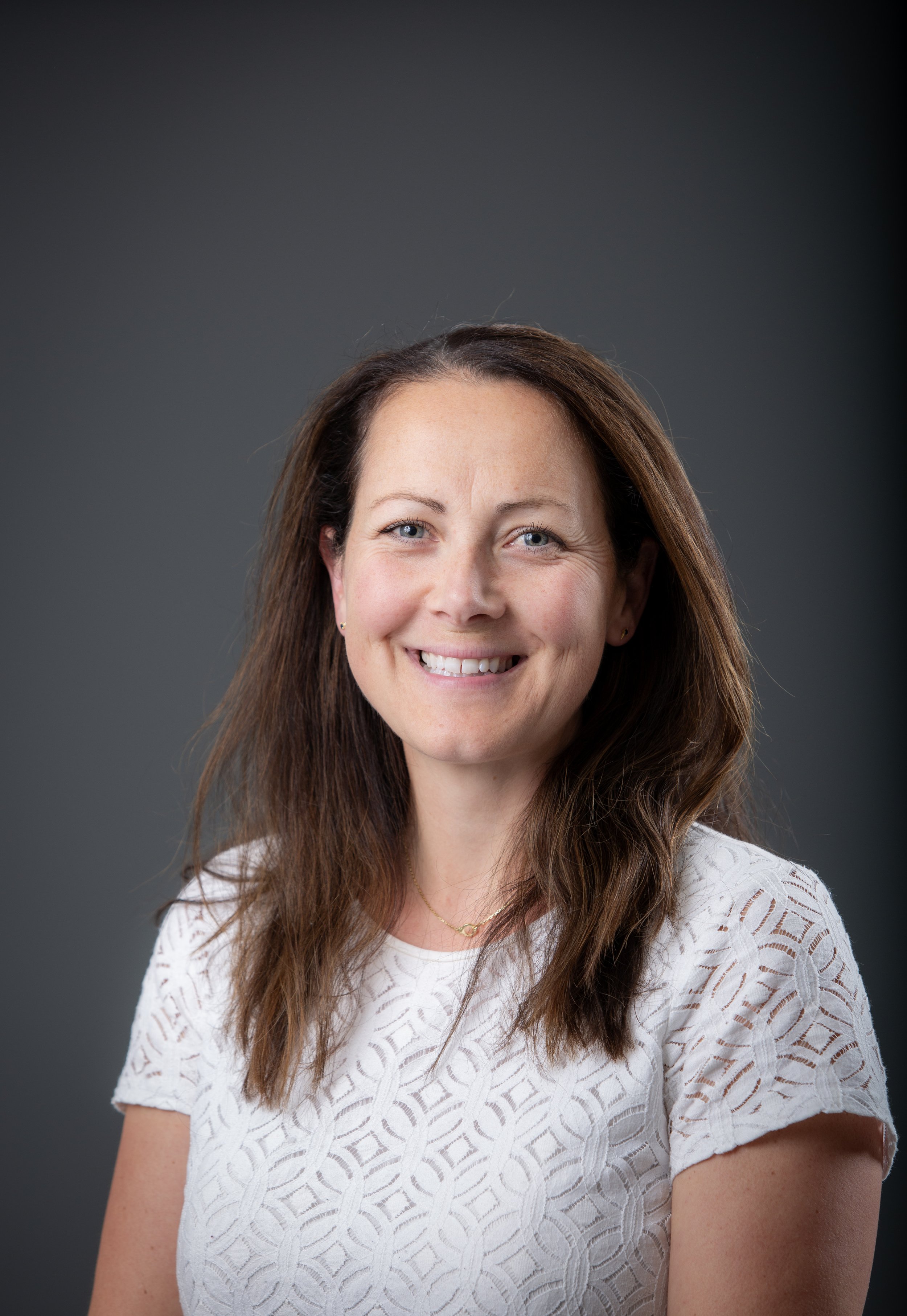
Lucy Piltcher MSW, LICSW (she/her)
GUEST, INTERVIEWER, CLINICAL SUPPORT
Lucy is a licensed clinical social worker who focuses on clinical mental health and substance use disorders. Lucy has experience working with people across the lifespan and spent many years working with children and adolescents who experienced trauma and mental health conditions alongside other stressors. More recently Lucy has focused her work with people experiencing cooccurring mental health and substance use disorders. Lucy has a particular interest in intergenerational trauma and substance use, building resilience through community and strengths based approaches to care. Lucy believes in the importance of human connection at all stages of life and recognizes that by listening and learning from one another we can create stronger communities and support individuals to find meaning in their lives. Lucy is excited about participating in Seen and Heard and creating a platform for young people to share their stories and gain strength from one another. In addition to being a therapist, Lucy is a mum of 3 young children, an avid trail runner and enjoys baking as a creative and therapeutic outlet.
-
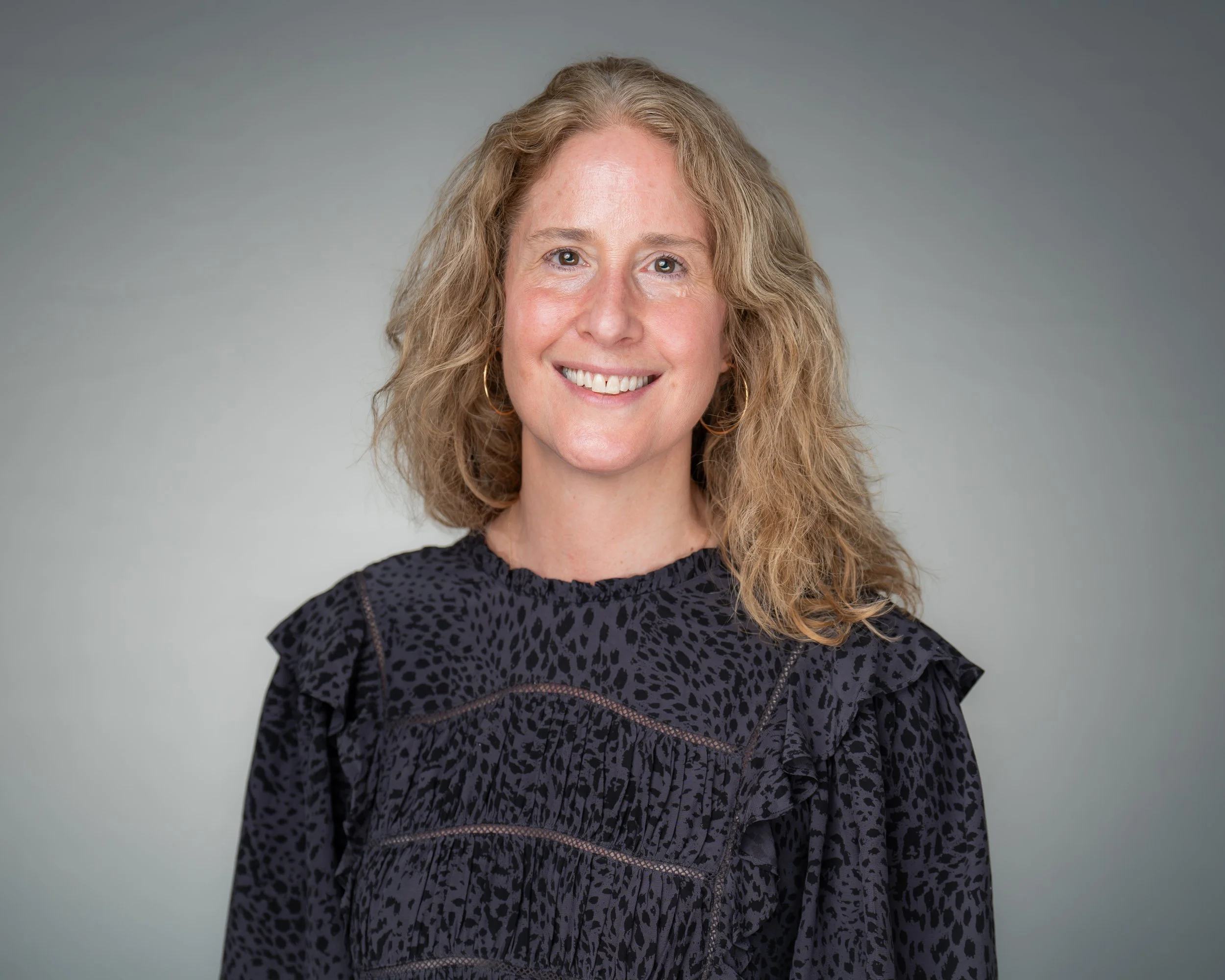
Kay Jankowski PhD (she/her)
GUEST, EXECUTIVE EDITOR, CLINICAL SUPPORT
Kay is a clinical psychologist and director of the Dartmouth Trauma Interventions Research Center in the Department of Psychiatry at Dartmouth Health. She has spent much of her career focused on attempting to improve access to quality care for youth and families experiencing trauma and mental health distress. Outside of work, Kay enjoys practicing yoga and cycling through the beautiful roads of Vermont and New Hampshire.
-

Julie Balaban M.D. (she/her)
INTERVIEWER, CLINICAL SUPPORT
Julie is Child and Adolescent Psychiatrist. Currently working at Dartmouth Health, Julie has a long career devoted to supporting and treating families who are managing mental health problems. In addition to working directly with people, Julie has also been committed to networking with professionals, schools and other invested community members to support youth and families.
She is excited about Seen and Heard bringing real life experiences to others who might benefit from hearing stories that speak to their own circumstances.
-
Hanna Brooks (she/her)
YOUNG GUEST RECRUITMENT
Hanna is a Community Health Partnership Coordinator at Dartmouth Health. In her role, she works under two Regional Public Health Networks (ALL Together and Greater Sullivan County Public Health Network) to engage youth in schools and support the community with substance misuse, mental health, and suicide prevention needs. Hanna lives in Claremont, NH with her partner and 2 cats, and is passionate about creating safe spaces for youth to thrive, as well as building meaningful connections with others. For these reasons, Hanna is excited and grateful to be a part of Seen and Heard.
-
Logan Paluch MEd, MPH (she/her)
GUEST RECRUITMENT & COMMUNICATIONS
Logan is a Project Manager at the Dartmouth Trauma Interventions Research Center. She works on grant funded projects focused on supporting youth mental health and families affected by substance use. She is passionate about creating opportunities for kids to thrive and believes that the power of the youth voice and experience can and will help make our world a better place.
Outside of work at Dartmouth, Logan runs a small toy store in Rutland, VT and enjoys skiing and spending time outside with her partner and three dogs.
-

Chris Trimble MBA (he/him)
PRODUCER, SCRIPT WRITER, AUDIO EDITOR, COMPOSER
Chris Trimble loves podcasts. So, after 17 years as a business school professor and then a mid-life choice to go back to college to study music composition,
Chris founded Treehouse Audio Productions. Treehouse produces limited-series podcasts for clients who have something important to say to a specific audience. Chris has produced podcasts focused on mental health, medical decision making, health policy, innovation, diversity in organizations, and operations management.
looking for more support?
We’ve put together some helpful resources for teens and supportive adults alike! Click the button to learn more.